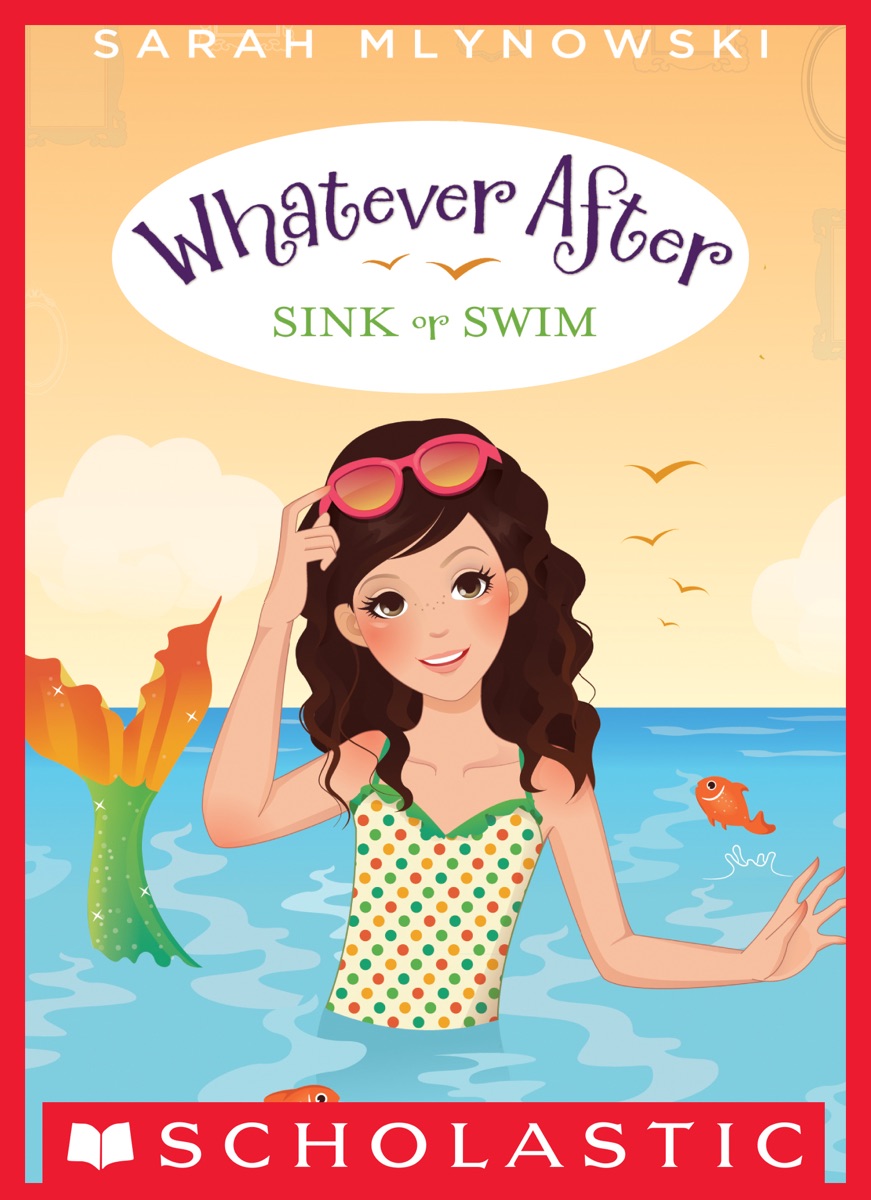
Sink or Swim
by Sarah Mlynowski · Whatever After #3
A fairy tale retelling that asks: should you change yourself for someone who won't accept you as you are?
The story
When siblings Abby and Jonah fall through their magic mirror into The Little Mermaid's world, they discover the original fairy tale is far darker than the Disney version. Their attempts to give the mermaid a happy ending keep failing, and they must navigate an underwater kingdom, a shallow prince, and a misunderstood sea witch before time runs out.
Age verdict
Best for ages 8-10, with the fairy tale humor and accessible reading level working well for younger readers and the self-worth themes adding depth for slightly older ones.
Our take
balanced
What stands out
Each audience's top 3 dimensions. Out of 30 scored per book.
Kids love
- First-chapter grab Strong
Opens with Abby's genuine disappointment about a cancelled trip — instantly relatable for any kid — then pivots within three chapters to a magic mirror plunge that drops readers underwater without warning. The emotional hook lands before the fantasy hook, which means kids are invested in Abby before the adventure starts.
- Middle momentum Strong
Every chapter ends on a revelation or escalation: the mermaid's identity, the prince's rejection, the transformation, the rival princess. The failed-plan structure keeps kids reading because Abby's strategies keep going wrong in surprising ways, and each failure raises the stakes higher than the last.
Parents love
- Stereotype-breaker Strong
The book quietly subverts fairy tale gender expectations: the prince is shallow and unredeemed rather than heroic, the girl protagonist drives the plot through strategy rather than beauty, and the central message — don't change yourself for someone who won't change for you — directly challenges traditional princess narratives.
- Moral reasoning Strong
The central moral question — should you change yourself for someone who won't accept you as you are — has genuine complexity for young readers. The sea witch's redemption through addressing loneliness rather than defeating evil models a sophisticated approach to conflict that parents can build conversations around.
Teachers love
- Discussion fuel Strong
Several genuinely debatable questions: Should Lana have changed herself for the prince? Was the prince wrong or just honest? Is the sea witch truly a villain if she's acting from loneliness? Should Abby have let the original story play out? Students can genuinely disagree on these without obvious right answers.
- Empathy & self-awareness Strong
Multiple characters require perspective-taking: Lana's willingness to sacrifice everything for love, the sea witch's loneliness driving her antagonism, the prince's inability to see past appearance. Students who engage with these perspectives develop understanding of how people make choices that seem wrong from the outside.
✓ Perfect for
- • readers who love fairy tale retellings with a fresh perspective
- • kids curious about the real versions of familiar stories
- • ages 8-10 looking for humor mixed with adventure
- • siblings who enjoy reading together
Not ideal for
Very sensitive readers may find water danger scenes and the concept of a character losing her voice unsettling, though both are handled age-appropriately.
At a glance
- Pages
- 176
- Chapters
- 22
- Words
- 39k
- Lexile
- 470L
- Difficulty
- Easy
- POV
- First Person
- Illustration
- Sparse
- Published
- 2013
Mood & style
You'll know it worked when…
Readers will know they're done when the siblings return through the mirror; the ending is satisfying and complete while leaving room for the next adventure.
If your kid loved "Sink or Swim"
Matched across 30 dimensions — interest hooks, character appeal, tone, pacing, emotional core. Not by what other people bought. By what fits the same reader profile.
The Land of Stories: A Grimm Warning
by Chris Colfer
fairy tale as secondary genre. Both adventurous in tone

The Little Engine That Could
by Watty Piper
Same genre (fairy tale). Same pacing (steady clip)

Rump: The True Story of Rumpelstiltskin
by Liesl Shurtliff
Same genre (fairy tale). Same pacing (steady clip)
The Stonekeeper
by Kazu Kibuishi
Both adventurous in tone. Same emotional weight (moderate)

Of Mice and Magic
by Ursula Vernon
fairy tale as secondary genre. Both adventurous in tone

The Hundred and One Dalmatians
by Dodie Smith
Both adventurous in tone. Same pacing (steady clip)
Want more picks like this?
Get 5 hand-picked book reviews for your child's age — one email a month.