
Rump: The True Story of Rumpelstiltskin
by Liesl Shurtliff · (Fairly) True Tales #1
A funny, heartfelt fractured fairy tale that turns Rumpelstiltskin into the hero and asks what it means to be named only halfway.
The story
Twelve-year-old Rump has been stuck with only half a name ever since his mother died giving birth to him, and on a hardscrabble mountain where everyone pans for gold, that half-name is a daily joke. When he finds his mother's old spinning wheel, he discovers he can spin straw into real gold — a talent that looks like rescue but starts to feel more like a trap every time he trades the gold to the village miller. With his sharp-tongued best friend Red, a dying grandmother's last words in his ears, and a warning from a witch in the woods that magic always has consequences, Rump sets out to find his full name — and his real destiny — before the bargains he has already made come due.
Age verdict
Best fit: 9–11. Mature 8-year-olds will enjoy it; mature 12-year-olds will still find heart in it.
Our take
kid-magnet
What stands out
Each audience's top 3 dimensions. Out of 30 scored per book.
Kids love
- Ending satisfaction Exceptional
A single physical action in the final chamber simultaneously resolves three separate plot problems, and a short epilogue inverts the Ch1 title into a full-circle naming moment — a deeply satisfying structural close that lands at A Wolf Called Wander (9, full-circle resolution with earned transformation) and beyond Mercy Watson: Something Wonky This Way Comes (8, every thread resolves).
- First-chapter grab Strong
Opens with 'My mother named me after a cow's rear end' — a voice-first, body-part-joke hook that delivers grief, stakes, and self-mocking narrator inside one sentence; stronger than All the Broken Pieces (7, YA verse with opening mystery) and on par with Lunch Lady and the Cyborg Substitute (8, kid-grounded opener that twists within five pages).
Parents love
- Stereotype-breaker Strong
Multiple systematic inversions of fairy-tale archetypes — the passive-princess figure revealed as vacant, cruel, terrified, then a loving mother; 'trolls' reframed as exploited survivors; the source tale's title villain recast as the hero — work together; peer with A Snicker of Magic (7, quiet subversions of multiple conventions) and approaching A Wolf Called Wander (8, systematic dismantling of a classic stereotype).
- Moral reasoning Strong
Escalating trades with a predatory adult model stepwise moral compromise, an impossible promise-keeping dilemma asks readers to sit with a bargain that cannot be un-made, and the protagonist eventually uses the ethics of the bargain system against the adult; comparable to A Wolf Called Wander (7, several genuine moral dilemmas arising naturally from the story).
Teachers love
- Read-aloud power Strong
Multiple performable set-pieces — a Ch1 chant ('Thump, Bump, Rump') purpose-built for call-and-response, a two-reader rhymed dialogue between narrator and aunt, and an italicized crescendo at the self-naming climax — give real oral-delivery pull; peer with The Golem's Eye (7, Bartimaeus's sarcastic asides and dramatic timing as highly performable voice).
- Classroom versatility Strong
Distinct chapter clusters map cleanly to classroom units — naming and identity, consequences of magic, inheritance, agency — plus a cook's run-on monologue usable as a grammar-lesson model and 33 short chapters that fit a multi-week serialized read-aloud; comparable to Fantastic Mr Fox (6, works effectively across read-aloud + novel study + literature circle) and reaching toward A Deadly Education (7, strong for high school ELA).
✓ Perfect for
- • kids who loved A Tale Dark and Grimm, Ella Enchanted, or The Tale of Despereaux
- • readers graduating from illustrated chapter books into full middle-grade fantasy
- • reluctant readers drawn in by a short-chaptered, funny, self-aware narrator
- • fairy-tale fans who enjoy point-of-view flips and 'villain's side of the story' retellings
- • teachers planning a fractured-fairy-tale or folklore unit
Not ideal for
sensitive 7–8 year olds who are not yet ready for on-page parent and grandparent deaths, a promise involving a baby, or adults behaving cruelly toward children
⚠ Heads up
At a glance
- Pages
- 264
- Chapters
- 33
- Words
- 62k
- Lexile
- 660L
- Difficulty
- Moderate
- POV
- First Person
- Illustration
- Sparse
- Published
- 2013
- Publisher
- Alfred A. Knopf / Random House Children's Books
Mood & style
You'll know it worked when…
If your child flips back to the first chapter and starts re-reading the 'cow's rear end' opening out loud to a sibling, you have a finisher.
If your kid loved this
Matched across 30 dimensions — interest hooks, character appeal, tone, pacing, emotional core. Not by what other people bought. By what fits the same reader profile.
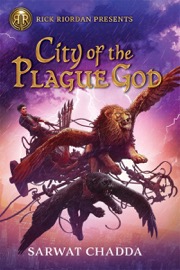
City of the Plague God
by Sarwat Chadda
Same pacing (steady clip). Same emotional weight (moderate)
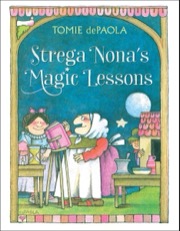
Strega Nona's Magic Lessons
by Tomie dePaola
Same genre (fairy tale). Both warm in tone
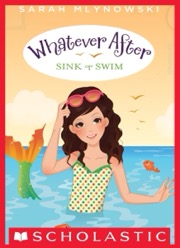
Sink or Swim
by Sarah Mlynowski
Same genre (fairy tale). Same pacing (steady clip)
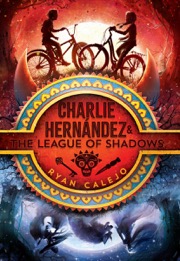
Charlie Hernández & the League of Shadows
by Ryan Calejo
Same pacing (steady clip). Same emotional weight (moderate)

Cattywampus
by Ash Van Otterloo
Both warm in tone. Same pacing (steady clip)

Twice Upon a Time
by James Riley
Same pacing (steady clip). Same emotional weight (moderate)
Want more picks like this?
Get 5 hand-picked book reviews for your child's age — one email a month.