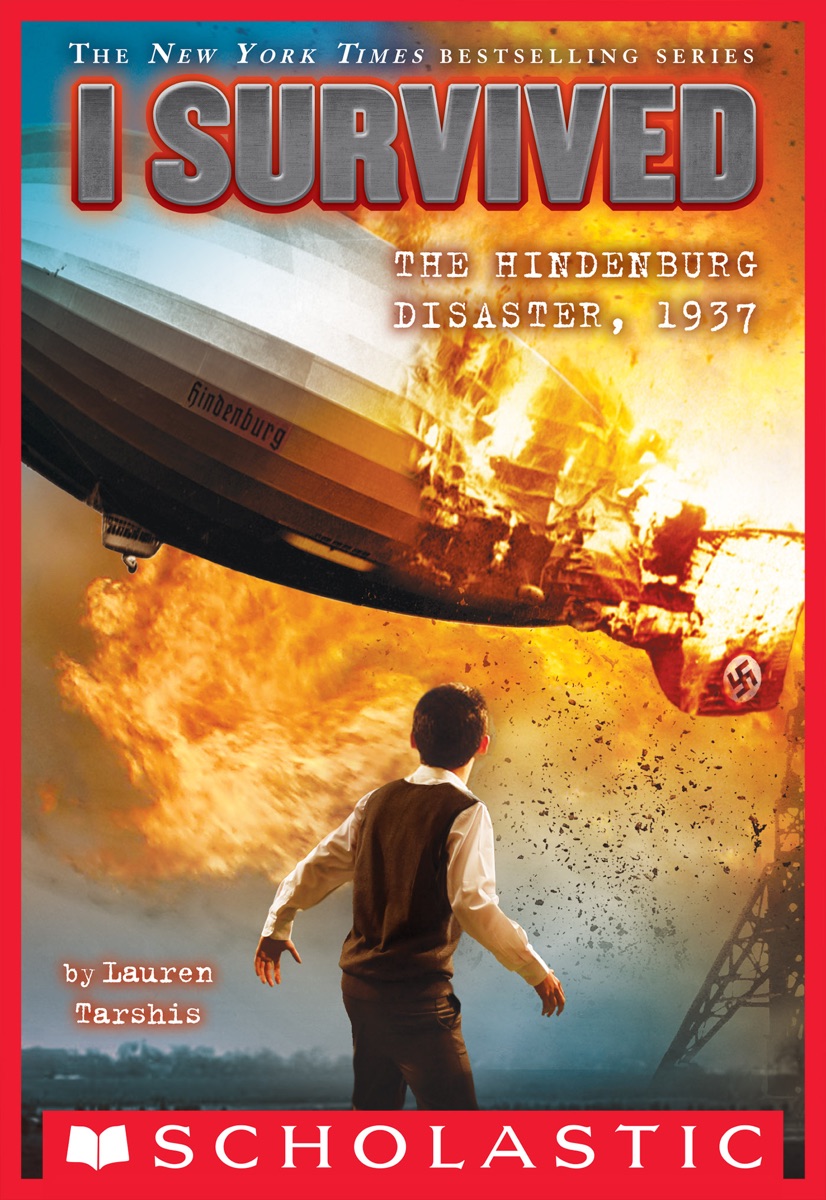
I Survived the Hindenburg Disaster, 1937
by Lauren Tarshis · I Survived #13
History crashes into survival as an 11-year-old boy fights to save his family aboard the doomed Hindenburg
The story
Eleven-year-old Hugo Ballard is crossing the Atlantic on the mighty Hindenburg with his parents and sick little sister, racing to reach New York doctors who can save her life. But the luxurious zeppelin holds dangerous secrets — Nazi officers hunting for a spy, a ticking clock of weather delays, and seven million cubic feet of flammable hydrogen gas. When disaster strikes, Hugo must find the courage to save the people he loves.
Age verdict
Best for ages 8-10; the disaster intensity is age-appropriate and the vocabulary accessible, though the spy subplot adds enough complexity to engage older readers through age 12.
Our take
A reliable classroom tool that hooks reluctant readers with disaster drama and delivers solid historical education, though its literary and emotional reach stays modest
What stands out
Each audience's top 3 dimensions. Out of 30 scored per book.
Kids love
- First-chapter grab Exceptional
Comparable to Artemis Fowl — immediate visceral catastrophe that drops reader into survival stakes within 6 sentences. In medias res opening with "In seconds, the Hindenburg would explode" states threat as fact. Hugo trapped in explosion with sensory shock (blast, "Kaboom!", flying back, sickening thud) creates identical reader contract to Artemis heist opening. Both create near-impossible first-chapter grip. Sits AT anchor.
- Mental movie Strong
"silver skin over metal bones, breathing gas cells like living lungs, silent feather-like ascent." Disaster sequence delivers cinematic imagery (fire, falling metal, shattered windows, smoke rushing up nose). Readers visualize vividly and remember long after reading session. Lunch Lady's fully-illustrated two-tone art creates equal visual impact in graphic format. Both lodge vivid sensory images that persist. Sits AT anchor.
Parents love
- Real-world window Strong
Hindenburg disaster, zeppelin engineering, hydrogen science, 1930s German politics, transatlantic travel before commercial aviation, East African wildlife and culture. Back matter adds verified facts and resources. Parent can confidently say this book teaches real history and science through engaging narrative. Both books are strong historical-disaster windows with verified facts and geographic/cultural learning integrated throughout. Narrative authenticity and factual depth match anchor. Sits AT.
- Reading gateway Strong
short length (112 pages), fast pacing (17 chapters, no slow middle), survival hook grabs immediately, accessible vocabulary (Lexile 700L), familiar series brand, illustrated throughout (Scott Dawson). In medias res opening eliminates slow-start barrier that stops many kids from finishing books. Series format encourages reading next installment. Survival hook (exploding airship) is more visceral than Paddington's everyday charm but equally effective for reluctant-reader entry. Both are masterclass gateway titles. Sits AT anchor.
Teachers love
- Classroom versatility Strong
Comparable to Earthquake in the Early Morning — functions effectively as read-aloud, independent reading, guided reading, novel study, historical text. Fifty+ lesson plans online covering comprehension, vocabulary, writing, cross-curricular connections. Series format means consistent teaching approach across multiple titles. Sits BELOW at 7 because lesson-plan abundance for I Survived series is strong but less universally adaptable than Earthquake's four standard second/third-grade curriculum anchor slots. EARLY format bridges more grade levels; I Survived is more niche to historical-fiction unit.
- Cross-curricular value Strong
Hard Luck — strong connections to history (1930s, Hindenburg disaster, Nazi Germany, pre-WWII politics), science (hydrogen chemistry, zeppelin engineering, buoyancy), geography (transatlantic routes, Kenya, New Jersey), health (malaria, fever treatment). Science and social studies teacher can co-plan meaningfully. A Wolf connects to biology (wolf pack behavior, predator-prey), geography (Pacific Northwest ecosystem), weather science. I Survived hits multiple domains but concentrated around single disaster. Sits at 7: substantial cross-curricular value but narrower scope than A Wolf's ecosystem breadth.
✓ Perfect for
- • Readers aged 8-10 who love survival stories and want to learn real history through gripping adventure. Especially effective for reluctant readers who need a fast-paced
- • short book with immediate stakes.
Not ideal for
Readers who are sensitive to disaster scenes with fire and injuries, or who prefer character-driven stories with deep emotional exploration over action-driven plots.
⚠ Heads up
At a glance
- Pages
- 112
- Chapters
- 17
- Words
- 13k
- Lexile
- 700L
- Difficulty
- Moderate
- POV
- Third Person Limited
- Illustration
- Moderate
- Published
- 2016
- Publisher
- Scholastic
- Illustrator
- Scott Dawson
- ISBN
- 9780545868600
Mood & style
You'll know it worked when…
Very likely to finish — the opening chapter drops readers into the disaster, making it nearly impossible to stop. At 112 pages with short chapters and constant escalation, even reluctant readers reach the end.
If your kid loved this
Matched across 30 dimensions — interest hooks, character appeal, tone, pacing, emotional core. Not by what other people bought. By what fits the same reader profile.

Little House on the Prairie
by Laura Ingalls Wilder
Same genre (historical). Same emotional weight (moderate)
Going Solo
by Roald Dahl
Same genre (historical). Same emotional weight (moderate)
Donner Dinner Party
by Nathan Hale
Same genre (historical). Same pacing (slow burn to explosive)
Refugee
by Alan Gratz
Same genre (historical). Same tension source (survival)
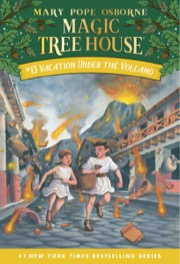
Vacation Under the Volcano
by Mary Pope Osborne
Same genre (historical). Same emotional weight (moderate)

Ground Zero
by Alan Gratz
Same genre (historical). Same tension source (survival)
Want more picks like this?
Get 5 hand-picked book reviews for your child's age — one email a month.