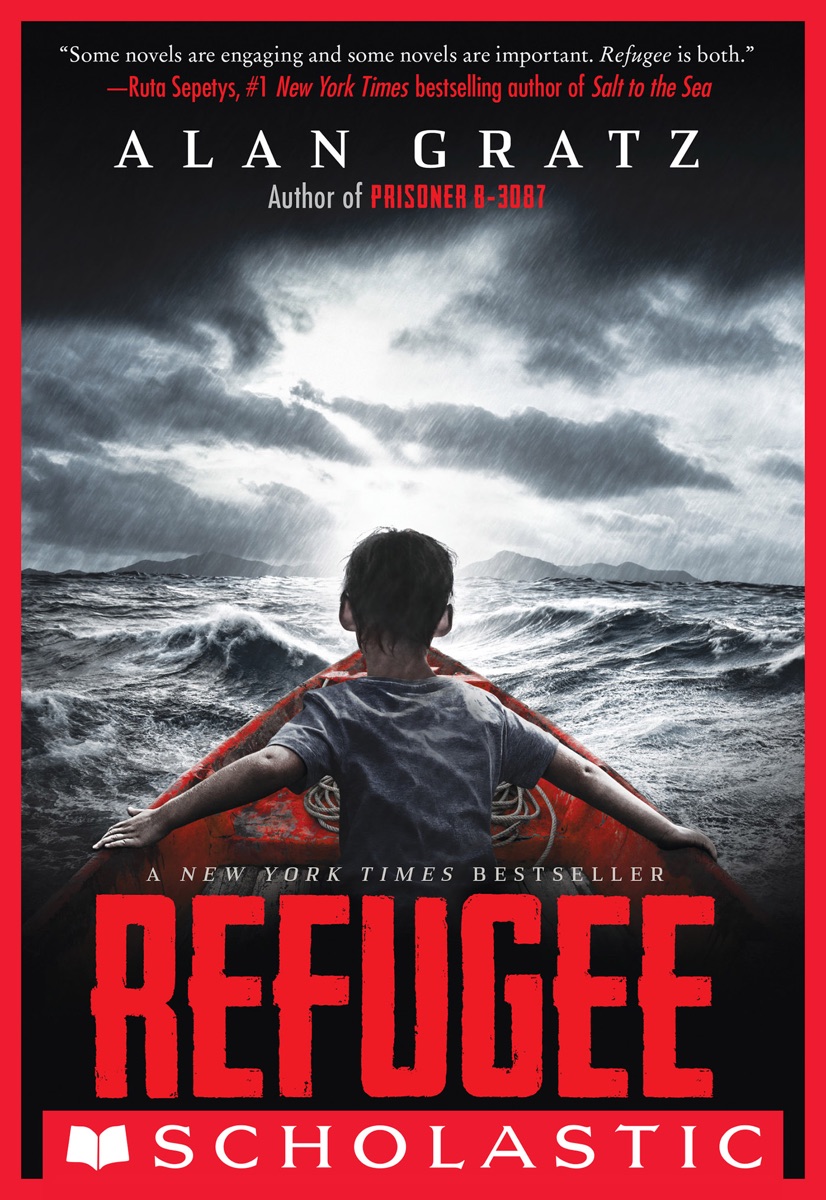
Refugee
by Alan Gratz
Three young refugees, three eras, one unforgettable journey through history's repeated crises
The story
A Jewish boy in 1930s Germany, a Cuban girl in 1994, and a Syrian boy in 2015 each flee danger with their families, facing treacherous journeys across seas and borders. Their stories, separated by decades and continents, weave together through surprising connections that show how the refugee experience echoes across generations.
Age verdict
Best for ages 10-13. Mature 9-year-olds with parental support can handle it, but the emotional weight is significant. Parents should be ready for conversations about violence, displacement, and difficult choices.
Our take
A teacher-favored historical novel with exceptional cross-curricular depth and moral complexity that delivers powerful emotional impact and real-world knowledge, though its serious tone limits humor and casual playground appeal.
What stands out
Each audience's top 3 dimensions. Out of 30 scored per book.
Kids love
- Heart-punch Exceptional
Comparable to Tristan Strong — Multiple devastating emotional peaks earned through investment (father breakdown, grandfather guilt, impossible parental choice). Sits below because emotional architecture is strong but slightly less relentless than Tristan's grief present on every page.
- New world unlocked Exceptional
Comparable to Artemis Fowl — Opens vivid windows into three historical crises (Nazi, Cuban, Syrian). Sits below because readers finish wanting to learn more, but world-building is slightly less inventive than anchor's fairy civilization.
Parents love
- Real-world window Exceptional
Comparable to Earthquake — Three historically accurate crises (St. Louis 1939, Cuban exodus 1994, Syrian trail 2015) woven with factual grounding. Sits at (matching) and edges toward 10 territory because readers understand refugee experiences as lived history across generations and geographies.
- Moral reasoning Exceptional
Comparable to Artemis Fowl — Genuinely impossible moral questions without clean answers (parent choosing children, bystander complicity, visibility paradox). Sits at (matching) because moral complexity exercises student values without easy framings.
Teachers love
- Classroom versatility Exceptional
Comparable to A Wolf Called Wander — Works across read-aloud, novel study, literature circles, independent reading, cross-curricular units. Sits below because three timelines allow differentiated instruction but is slightly less universally flexible than anchor's elegant fit across every format.
- Cross-curricular value Exceptional
Comparable to Earthquake — Bridges to WWII/Holocaust, Cuban Cold War, Syrian civil war, immigration policy, contemporary refugee issues. Sits at (matching) because three timelines create three distinct curriculum entry points for natural co-planning across disciplines.
✓ Perfect for
- • Readers ages 10-13 who are ready for emotionally powerful historical fiction
- • Kids who want to understand real-world events through personal stories
- • Families looking for meaningful read-aloud and discussion material
- • Classrooms studying immigration, world history, or social justice
Not ideal for
Younger or sensitive readers who may be overwhelmed by sustained scenes of persecution, family separation, and impossible moral choices. Not a light or feel-good read.
⚠ Heads up
At a glance
- Pages
- 338
- Chapters
- 63
- Words
- 75k
- Lexile
- 800L
- Difficulty
- Moderate
- POV
- Alternating
- Illustration
- None
- Published
- 2017
- Publisher
- Scholastic, Inc.
- ISBN
- 9781338324723
Mood & style
You'll know it worked when…
A child who finishes this book and immediately wants to discuss what happened, ask questions about refugees, or learn more about the historical events has gotten exactly what the book offers.
If your kid loved "Refugee"
Matched across 30 dimensions — interest hooks, character appeal, tone, pacing, emotional core. Not by what other people bought. By what fits the same reader profile.
Ground Zero
by Alan Gratz
Same genre (historical). Both intense in tone
Grenade
by Alan Gratz
Same genre (historical). Both intense in tone
Freewater
by Amina Luqman-Dawson
Same genre (historical). Both intense in tone

Between Shades of Gray
by Ruta Sepetys
Same genre (historical). Both intense in tone
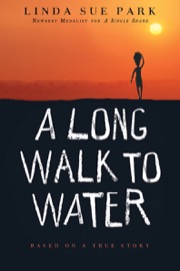
A Long Walk to Water
by Linda Sue Park
historical as secondary genre. Both intense in tone

Little House on the Prairie
by Laura Ingalls Wilder
Same genre (historical). Same tension source (survival)
Featured in our guides
- Best Of
Best Books for 10-Year-Olds
Data-scored book picks for 10-year-olds rated across 30 dimensions by kids, parents, and teachers. Find your child's next favorite read. Trusted picks.
- Best Of
Best Realistic Fiction for Middle Schoolers
Curated picks scored across 30 dimensions by kids, parents, and teachers. Data-backed recommendations for your child's next great read. Trusted picks.
Want more picks like this?
Get 5 hand-picked book reviews for your child's age — one email a month.