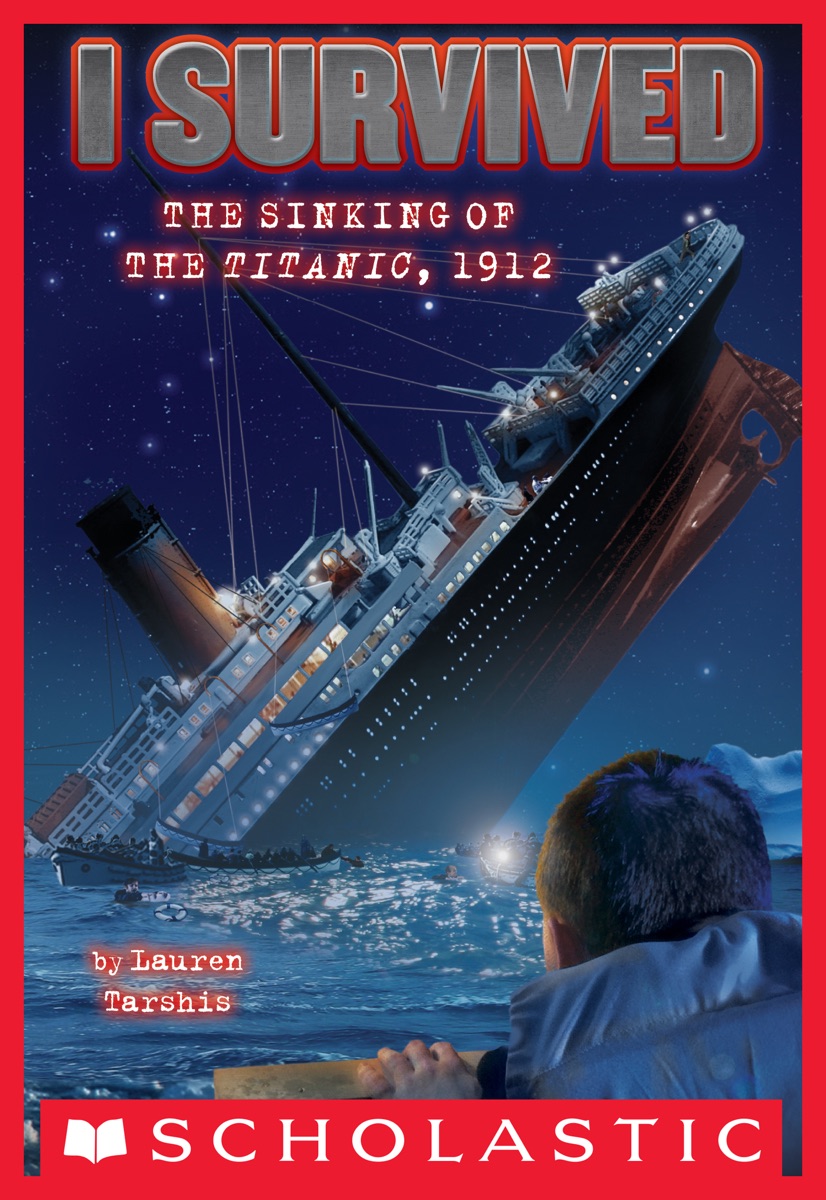
I Survived the Sinking of the Titanic, 1912
by Lauren Tarshis · I Survived #1
A gripping survival story that turns the Titanic disaster into a personal journey of courage, grief, and family connection.
The story
Ten-year-old George Calder is crossing the Atlantic on the Titanic with his little sister Phoebe and Aunt Daisy when disaster strikes. As the ship begins to sink, George must navigate flooded corridors, face impossible choices, and find the courage to survive — while carrying the grief of losing his mother months earlier. A fast-paced historical adventure that treats young readers as capable of handling real emotion.
Age verdict
Best for ages 8-10. Younger readers (7) can handle it with adult support. Older readers (11-12) will appreciate the emotional depth even if the reading level is below their capacity.
Our take
A historically grounded survival story that scores highest with teachers for its cross-curricular richness and reluctant-reader appeal. Kids and parents score evenly — hooked by immediate danger and real-world depth respectively, but humor-light design keeps the kid total below pure entertainment books. The first-chapter hook is the book's standout attribute.
What stands out
Each audience's top 3 dimensions. Out of 30 scored per book.
Kids love
- First-chapter grab Exceptional
George grips the Titanic railing in media res, terrified, calling for his dead mother. Combines Lunch Lady's immediate danger with emotional depth (Artemis's audacity of opening in a child's inner world). The dual-layer hook — physical peril + emotional vulnerability in the opening paragraph — makes this equal to Lunch Lady and worth the tier-9 classification. Sits at K1=9 because the emotional complexity exceeds the pure-premise hook.
- Middle momentum Strong
mischief → mummy obsession → robber encounter → iceberg strike → separation → abandonment → survival → rescue → reunion. The 48-hour compressed timeframe matches Breakout's 22-day manhunt in escalation intensity. Pacing mirrors the relentless pull-forward but achieves it through survival stakes rather than crime. Sits at K2=8 because the density of incident per page exceeds Breakout's sustained but episodic structure.
Parents love
- Real-world window Strong
Comparable to Lafayette! (Nathan Hale's Hazardous Tales #8) . The Titanic disaster becomes a window into 1912 class inequality, immigration, maritime safety failures, and human cost of hubris. Third-class passengers locked behind gates while first-class board lifeboats. Author's note provides additional context. Lafayette offers a comprehensive Revolutionary War window. Sits at P6=8 because the historical window is strong but event-specific rather than multi-faceted war/politics context.
- Reading gateway Strong
The Sand Warrior . Short chapters, accessible vocabulary, immediate action, familiar disaster concept, series hook make this a powerful gateway. The I Survived series is specifically designed to hook reluctant readers. 5 Worlds is barrier-free due to graphic format. Sits at P7=8 because prose-only format is still a slight barrier versus graphic novels, though the book is elite-tier gateway.
Teachers love
- Cross-curricular value Strong
history (1912, passenger demographics, maritime regulation), science (buoyancy, hypothermia, engineering), social studies (class systems, immigration, inequality), geography (Atlantic routes, New York). Wolf Wander achieves T4=10 through biology + geography + social studies. Sits at T4=8 because cross-curricular breadth is equivalent (4+ subjects) with substantive curriculum alignment.
- Reluctant reader rescue Strong
The Scarlet Shedder and Diary of a Wimpy Kid: Hard Luck . Triangulated: I Survived is specifically designed to hook reluctant readers—immediate danger, short chapters, accessible vocabulary, boy protagonist in physical peril, real historical stakes, series structure. Dog Man adds visual + humor + interactive elements . Wimpy Kid is the gold standard reluctant-reader engagement . Sits at T9=8 because design matches Wimpy Kid's elite appeal; second to graphic-heavy Dog Man.
✓ Perfect for
- • Kids who love action and real danger
- • Reluctant readers who need a short, fast-paced hook
- • History enthusiasts curious about the Titanic
- • Readers ready to graduate from picture books to chapter books
- • Kids who want to feel brave alongside a brave character
Not ideal for
Sensitive readers who are distressed by separation from parents or large-scale disaster scenarios. The book handles these topics with restraint but they are central to the story.
⚠ Heads up
At a glance
- Pages
- 112
- Chapters
- 25
- Words
- 12k
- Lexile
- 590L
- Difficulty
- Easy
- POV
- First Person
- Illustration
- Sparse
- Published
- 2010
- Publisher
- Scholastic en espanol
- Illustrator
- Scott Dawson
- ISBN
- 9781338359152
Mood & style
You'll know it worked when…
Most kids finish in 1-2 sittings. The short chapters and escalating stakes make this a natural one-sitting read for motivated readers.
If your kid loved this
Matched across 30 dimensions — interest hooks, character appeal, tone, pacing, emotional core. Not by what other people bought. By what fits the same reader profile.
Ground Zero
by Alan Gratz
Same genre (historical). Both intense in tone
Grenade
by Alan Gratz
Same genre (historical). Both intense in tone
Refugee
by Alan Gratz
Same genre (historical). Both intense in tone
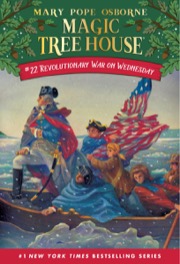
Revolutionary War on Wednesday
by Mary Pope Osborne
Same genre (historical). Same pacing (steady clip)

Number the Stars
by Lois Lowry
Same genre (historical). Both intense in tone

Little House on the Prairie
by Laura Ingalls Wilder
Same genre (historical). Same emotional weight (moderate)
Want more picks like this?
Get 5 hand-picked book reviews for your child's age — one email a month.