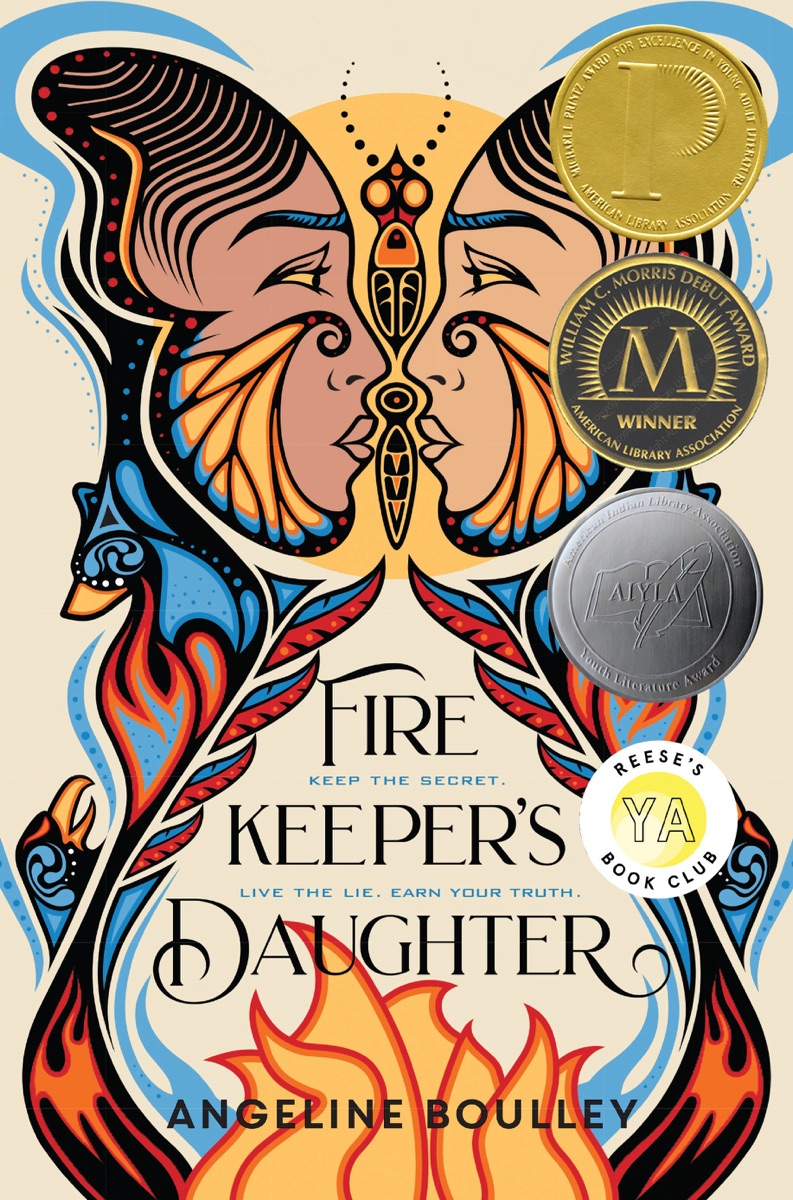
Firekeeper's Daughter
by Angeline Boulley
A Printz-winning Indigenous YA thriller that braids investigation, identity, and Anishinaabe community life into a singular literary debut.
The story
Eighteen-year-old Daunis Fontaine — biracial, science-bound, hockey-loyal — is pulled into an undercover investigation of a methamphetamine operation tearing through her Ojibwe community in Michigan's Upper Peninsula. As she navigates the impossible costs of being a confidential informant against people she loves, she also walks an interior path toward claiming her Anishinaabe identity, her power, and her voice.
Age verdict
Best for 16+ readers; thoughtful 15-year-olds with parent awareness can manage. Not appropriate for middle-grade readers despite the YA shelving.
Our take
Literary YA thriller — parent-favored profile reflecting exceptional representation, literary craft, and real-world depth, balanced by kid-strong emotional and cultural-window pull.
What stands out
Each audience's top 3 dimensions. Out of 30 scored per book.
Kids love
- Heart-punch Exceptional
Devastating sustained emotional architecture — early loss, Uncle David's drugged-driving demise, Daunis's own assault, the affidavit-flood validation in ch.23, and the recovery work in the closing chapters earn every tear; in the same league as A Court of Mist and Fury (9, devastating across dozens of chapters), short of Tristan Strong (10) only because grief shares space with thriller mechanics rather than being the singular engine.
- New world unlocked Exceptional
Opens an exceptional cultural window — most non-Indigenous readers will encounter Anishinaabe language, ceremonial practice, tribal sovereignty law, federal Indian Country jurisdiction, and the Violence Against Women Act gap here for the first time, and the integration is so seamless readers absorb it as story; comparable to The Golem's Eye (9, magical London with seven planes) for world-richness, but operating on real-world stakes.
Parents love
- Stereotype-breaker Exceptional
Best-in-class representation — author Angeline Boulley is an enrolled member of the Sault Ste. Marie Tribe of Chippewa Indians writing from inside, and the book systematically dismantles every Native-protagonist stereotype: Daunis is a science-track hockey player navigating biracial belonging, the elders are political agents not wisdom-dispensers, the community has internal disagreement, and the ceremony scenes are sacred rather than performative; matches Legendborn (10, most-visible stereotype break in contemporary YA) on its own cultural ground.
- Moral reasoning Exceptional
Genuinely difficult moral terrain throughout — Daunis weighs informant ethics against tribal loyalty, has to lie to people who love her, must judge when justice requires breaking community trust, and works out what truth-telling costs when truth implicates family; comparable to Artemis Fowl (9, complexity without easy answers) on a far more grounded stakes axis, just below We'll Always Have Summer (10) because the central thriller frame supplies some moral scaffolding.
Teachers love
- Cross-curricular value Exceptional
Exceptional cross-curricular reach — federal Indian law and tribal sovereignty (civics), the meth crisis and chemistry of synthesis (chemistry/health), Anishinaabemowin and code-switching (linguistics), missing and murdered Indigenous women (sociology/journalism), Ojibwe ceremonial cosmology (religion/anthropology), Sault Ste. Marie and Great Lakes geography (geography/history); comparable to A Reaper at the Gates (9, empire-and-colonialism allegories) on contemporary real-world ground.
- Discussion fuel Exceptional
Nearly every plot turn generates classroom disagreement — was Daunis right to become a CI, can Jamie be trusted as a romantic partner given his deception, what does the federal government owe tribal sovereignty in this investigation, when does loyalty to family become complicity, what does justice for a community-wide harm actually look like; matches Breakout (10, nearly every theme generates disagreement) tier for sustained discussion fuel.
✓ Perfect for
- • Older teens who loved The Hate U Give and want a contemporary thriller anchored in cultural specificity
- • Mature readers ready for a literary mystery that treats trauma, ceremony, and sovereignty with equal seriousness
- • Adult crossover readers who follow Reese's YA book club picks
- • Students in Native American Studies, contemporary Indigenous literature, or AP English
Not ideal for
Readers under 15, or older teens not ready for a detailed assault scene, on-page drug operations, gun violence, and sustained grief content.
⚠ Heads up
At a glance
- Pages
- 496
- Chapters
- 70
- Words
- 140k
- Lexile
- 720L
- Difficulty
- Challenging
- POV
- First Person
- Illustration
- None
- Published
- 2021
Mood & style
You'll know it worked when…
Most engaged readers finish — the thriller pull and emotional investment carry the 496 pages. Readers who put it down typically do so during the assault chapter rather than from boredom.
If your kid loved "Firekeeper's Daughter"
Matched across 30 dimensions — interest hooks, character appeal, tone, pacing, emotional core. Not by what other people bought. By what fits the same reader profile.
The Blackthorn Key
by Kevin Sands
Same genre (mystery). Both suspenseful in tone

Enola Holmes: The Case of the Left-Handed Lady
by Nancy Springer
Same genre (mystery). Both suspenseful in tone

CHERUB: Class A
by Robert Muchamore
Both suspenseful in tone. Same emotional weight (heavy)
Silverborn: The Mystery of Morrigan Crow
by Jessica Townsend
mystery as secondary genre. Both suspenseful in tone
The Bungalow Mystery
by Carolyn Keene
Same genre (mystery). Both suspenseful in tone

Geronimo Stilton Reporter #6: Paws Off, Cheddarface!
by Geronimo Stilton (Elisabetta Dami)
Same genre (mystery). Shared humor: situational
Want more picks like this?
Get 5 hand-picked book reviews for your child's age — one email a month.