
Emmy in the Key of Code
by Aimee Lucido
A luminous verse novel where coding and music become the same language — a new-school story for kids who don't fit the boxes they're handed.
The story
Twelve-year-old Emmy moves from Wisconsin to San Francisco and doesn't belong anywhere — not at her musical mother's piano, not in her new middle school's cafeteria, not in the sixth-grade friendship map. Then an elective she didn't want — computer science with the electric Ms. Delaney — opens a door to a new way of thinking. Told in short verse chapters that sometimes format themselves as code, this is a quiet literary story about finding your own language when the inherited one doesn't fit.
Age verdict
Best at 10-12. Advanced 9-year-olds with literary tastes can enjoy it; capable older middle-schoolers will still find depth.
Our take
literary_gem
What stands out
Each audience's top 3 dimensions. Out of 30 scored per book.
Kids love
- Character voice Strong
Emmy's musical-metaphorical thinking — rests as silence, trills as joy, piccolos cutting through concertos — creates a voice readers recognize in a single line. Stronger than A Wolf Called Wander (7, consistent but less distinctive) and approaching Abel's Island (9, literary voice); closest match is The Crossover (8, verse-novel voice with signature syntactic fingerprint).
- Heart-punch Strong
The middle-section emotional turn around Ms. Delaney and Ch.278's private affirmation land with sustained emotional weight — Emmy's 'I am void' stanza haunts. Stronger than Wonder (7, episodic warmth) and approaching Bridge to Terabithia (9, devastating loss); closest match is The One and Only Ivan (8, controlled emotional build that detonates in intimate moments).
Parents love
- Writing quality Exceptional
Kirkus-starred verse with controlled line breaks, precise imagery, and emotional restraint — the 'California Dreaming' opening and Ch.250 fairy-tale interlude demonstrate literary-grade craft. Stronger than Maze Runner (7, plain propulsive prose) and comparable to The Crossover (9, Newbery-winning verse novel); reaches Brown Girl Dreaming (9, literary verse-memoir craft).
- Vocabulary builder Strong
Dual specialist vocabulary — music terms (crescendo, polyrhythm, piccolo) and coding terms (boolean, while loop, method) — used naturally without definition dumps, supported by two glossaries. Stronger than Wonder (6, standard MG vocabulary) and comparable to A Wrinkle in Time (8, physics terms in context); approaches The Giver (9, conceptual vocabulary scaffolding).
Teachers love
- Cross-curricular value Exceptional
Native ELA-STEM-music integration — a single book fuels poetry analysis, intro coding, music theory, and social studies (San Francisco geography, tech history). Rare. Stronger than Wonder (6, ELA-SEL only) and The Crossover (7, ELA-PE); approaches A Wrinkle in Time (9, ELA-physics) and rivals The Phantom Tollbooth (9, ELA-math-language).
- Read-aloud power Strong
Verse-novel format makes read-aloud native — short poems with tight line breaks, musical diction, and voice-driven rhythm work beautifully aloud. Stronger than Wonder (7, prose-novel read-aloud) and comparable to The Crossover (8, verse-novel read-aloud champion); approaches Brown Girl Dreaming (9, oral-tradition grade).
✓ Perfect for
- • readers who loved The Crossover, Inside Out and Back Again, or Counting by 7s
- • middle-schoolers going through a move or school transition
- • artistic kids curious about STEM and STEM kids curious about poetry
- • families looking for a girl-in-tech story that doesn't feel like a lecture
Not ideal for
Readers who need high-velocity plot or comedic fireworks — this is a reflective, emotionally layered verse novel, not a page-turner.
⚠ Heads up
At a glance
- Pages
- 383
- Chapters
- 250
- Words
- 60k
- Difficulty
- Moderate
- POV
- First Person
- Illustration
- None
- Published
- 2019
Mood & style
You'll know it worked when…
Likely to finish for literary and character-driven readers; reluctant readers may need scaffolding despite the short chapters.
If your kid loved "Emmy in the Key of Code"
Matched across 30 dimensions — interest hooks, character appeal, tone, pacing, emotional core. Not by what other people bought. By what fits the same reader profile.

The Cardboard Kingdom
by Chad Sell
Same genre (realistic fiction). Both hopeful in tone
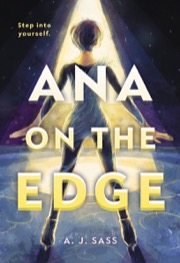
Ana on the Edge
by A. J. Sass
Same genre (realistic fiction). Both hopeful in tone

Criss Cross
by Lynne Rae Perkins
Same genre (realistic fiction). Same pacing (measured)
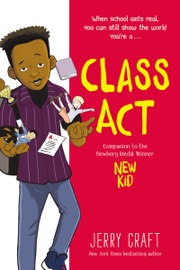
Class Act
by Jerry Craft
Same genre (realistic fiction). Both hopeful in tone
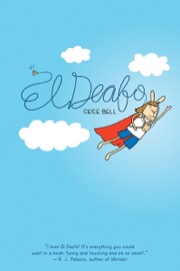
El Deafo
by Cece Bell
Same genre (realistic fiction). Same pacing (measured)
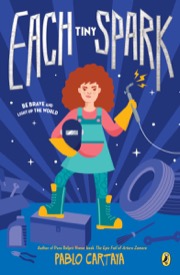
Each Tiny Spark
by Pablo Cartaya
Same genre (realistic fiction). Both hopeful in tone
Want more picks like this?
Get 5 hand-picked book reviews for your child's age — one email a month.