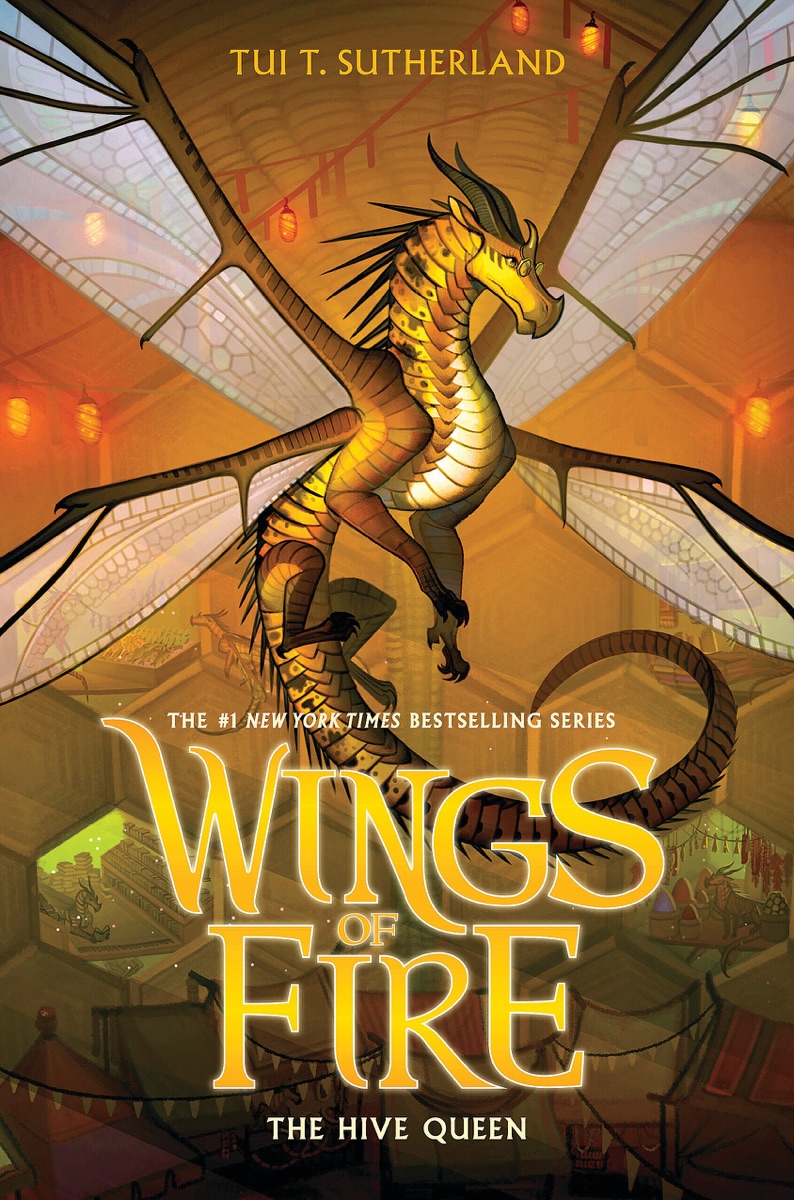
The Hive Queen (Wings of Fire, Book 12)
by Tui T. Sutherland · Wings of Fire #12
A dragon rebellion story that is really about learning to think for yourself
The story
Cricket is a young HiveWing dragon who discovers she can think independently — something no dragon in her tribe should be able to do. Fleeing with a group of unlikely allies from different dragon tribes, she must uncover the truth about her Queen's control over an entire civilization while questioning everything she was raised to believe about herself and her world.
Age verdict
Best for ages 9-11 with series familiarity. The mind-control themes and identity crisis add emotional complexity that younger readers (8) may find abstract, while older readers (12-13) will appreciate the political allegory.
Our take
Thoughtful fantasy with strong moral and empathetic dimensions that teachers value most, slightly ahead of kid entertainment and parent growth metrics — a book that earns its place through thematic depth rather than spectacle.
What stands out
Each audience's top 3 dimensions. Out of 30 scored per book.
Kids love
- Heart-punch Strong
early identity crisis shaking protagonist's sense of self, quiet midpoint where she recognizes weight of choosing her own path, climactic liberation sequence earning triumph through sustained struggle. Sits at: emotional architecture scaled across full book with force; not 9-level devastating weight of A Court of Mist and Fury.
- New world unlocked Strong
Comparable to The Golem's Eye (9), sits slightly below at 8 — Pantala's dragon civilization introduces mind-linked society, tribal politics (HiveWings, SilkWings, LeafWings), and ecological world-building sparking genuine curiosity. Concept of shared consciousness is novel, sending readers exploring series mythology. Sits below 9: world inventive but not as architecturally complex/labyrinthine as 9-level anchor.
Parents love
- Moral reasoning Exceptional
Is individual freedom worth chaos? Are beings who act under mind control morally responsible? Can oppressors who were controlled themselves be forgiven? Layered questions surpass simple good-versus-evil and arise naturally from plot. Sits at: moral complexity is sophisticated and genuine; questions arise through story rather than explicit philosophical processing.
- Emotional sophistication Strong
Comparable to Breakout (8), triangulated with A Deadly Education — An early emotional crisis requires genuine maturity to process; themes of constructed identity and authentic self emerge organically. Aftermath of liberation portrayed as uncertain and complex rather than purely triumphant. Characters hold contradictory feelings simultaneously (freedom + uncertainty, identity loss + gain). Sits at: matches anchor—complex emotional states held; characters navigate contradiction.
Teachers love
- Discussion fuel Strong
Comparable to Sunny Rolls the Dice (9), sits at 8 — Questions about identity, freedom, moral responsibility generate genuine student disagreement—no clean answers to whether controlled beings bear moral responsibility or whether liberation justifies chaos. Students bring different values and experiences to questions, producing rich classroom debate. Sits at: excellent discussion fuel; not 9-level intensity of peer-pressure/authenticity pivot debates.
- Empathy & self-awareness Strong
Comparable to Amal Unbound (8) — Understanding characters who have never known independent thought requires genuine perspective-taking. Moral complexity around antagonists (enforce control because controlled themselves) builds empathy and reduces binary thinking. Students develop understanding of how systems shape individuals beyond good-versus-evil frameworks. Sits at: exceptional empathy-building through multi-perspective understanding; matches anchor.
✓ Perfect for
- • Readers aged 9-12 who love the Wings of Fire series and are ready for its most thematically rich installment
- • Kids fascinated by questions of identity, freedom, and what makes someone who they are
- • Young readers who enjoy fantasy worlds with complex political systems and tribal dynamics
- • Children developing empathy for people different from themselves
Not ideal for
New readers unfamiliar with the Wings of Fire series — this is book 12 of 16 and requires significant series context. Also not ideal for readers seeking primarily comedic or light adventure — this installment carries heavier emotional weight than some earlier entries.
⚠ Heads up
At a glance
- Pages
- 286
- Chapters
- 29
- Words
- 85k
- Lexile
- 770L
- Difficulty
- Moderate
- POV
- Third Person Limited
- Illustration
- Sparse
- Published
- 2018
- Publisher
- Scholastic Inc.
- ISBN
- 9781338214505
Mood & style
You'll know it worked when…
This book resolves its central conflict while opening questions for the remaining series installments. Readers will want to continue to book 13.
If your kid loved this
Matched across 30 dimensions — interest hooks, character appeal, tone, pacing, emotional core. Not by what other people bought. By what fits the same reader profile.
A Wish in the Dark
by Christina Soontornvat
Same genre (fantasy). Both hopeful in tone

Skycircus
by Peter Bunzl
Same genre (fantasy). Same pacing (rollercoaster)
The Golem's Eye
by Jonathan Stroud
Same genre (fantasy). Same pacing (rollercoaster)
Rise of the Evening Star
by Brandon Mull
Same genre (fantasy). Same pacing (rollercoaster)
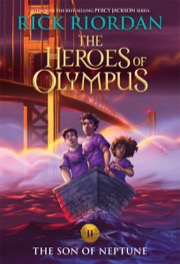
The Son of Neptune
by Rick Riordan
Same genre (fantasy). Same pacing (rollercoaster)
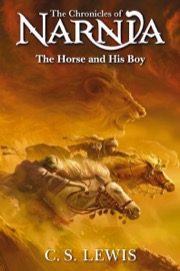
The Horse and His Boy
by C.S. Lewis
Same genre (fantasy). Same pacing (rollercoaster)
Want more picks like this?
Get 5 hand-picked book reviews for your child's age — one email a month.