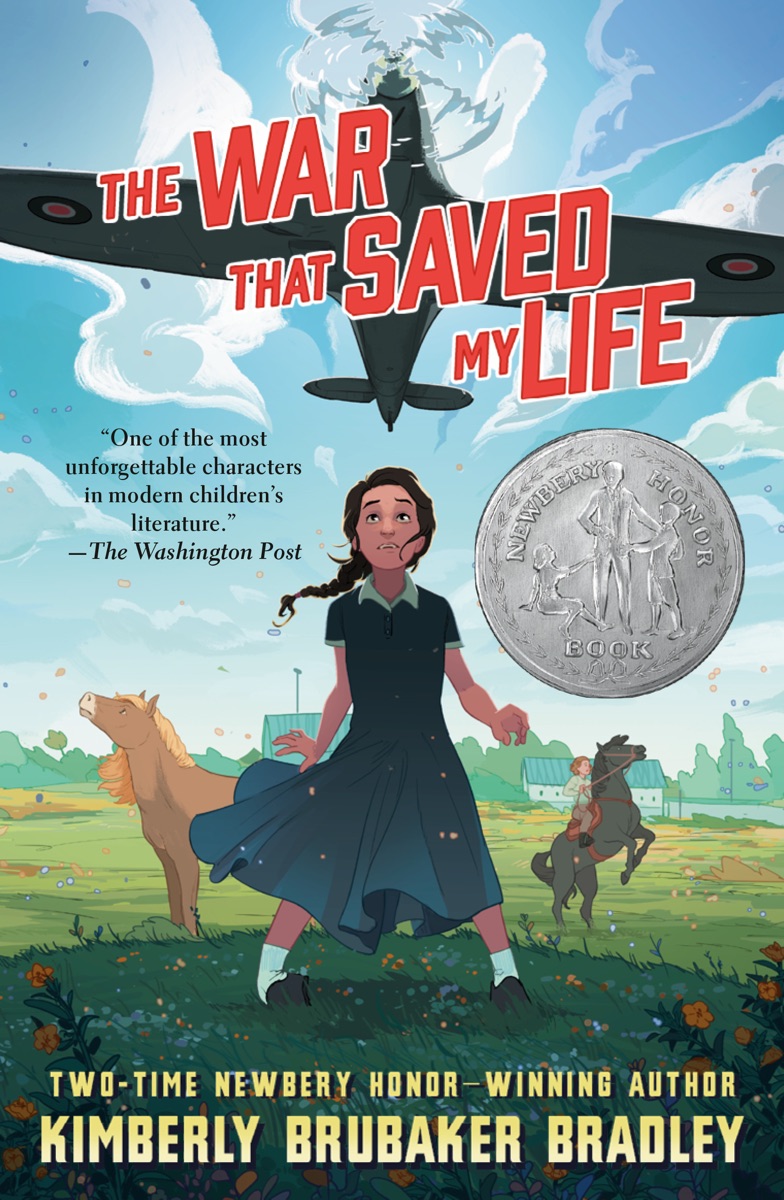
The War That Saved My Life
by Kimberly Brubaker Bradley · The War That Saved My Life #1
A powerful story of a disabled girl who escapes abuse during WWII evacuation and discovers love, family, and her own worth.
The story
Ten-year-old Ada has a clubfoot and has never been allowed outside her one-room London flat by her abusive mother. When World War II evacuations begin, Ada teaches herself to walk and escapes with her younger brother Jamie to the English countryside, where an unexpected guardian named Susan shows Ada what love and belonging feel like for the first time.
Age verdict
Best for ages 10-12, though a strong 9-year-old reader with emotional maturity can handle it. The abuse scenes are honest but not graphic, and the wartime bombing is intense but brief.
Our take
Emotional depth champion — rich literary craft and moral complexity earn strong parent and teacher scores, while the serious tone and minimal humor naturally lower pure-entertainment kid metrics.
What stands out
Each audience's top 3 dimensions. Out of 30 scored per book.
Kids love
- Heart-punch Exceptional
Comparable to Bridge to Terabithia — Ada's emotional arc—teaching herself to walk through bleeding blisters, seeing the ocean for the first time, Susan's rescue during bombing—builds across the entire book and releases in scenes that move most readers to tears. Like Bridge's emotional payoff, the stakes are sustained and the culmination is devastating.
- Ending satisfaction Strong
Comparable to Charlotte's Web — The ending delivers a brief, earned resolution that feels both inevitable and deeply satisfying. Like Charlotte's Web, the emotional questions raised throughout are answered in ways that honor the protagonist's entire journey. Readers feel that every difficult page was worth the read.
Parents love
- Moral reasoning Exceptional
understanding someone's damage does not require excusing their harm. Like The Giver's moral complexity about choice and sacrifice, this book asks whether obligation and love are the same, whether you can forgive without reconciling, what you owe a parent who hurt you. These questions have no clean answers.
- Emotional sophistication Exceptional
shame of worthlessness, terror of accepting love after abuse, guilt of feeling happy when mother is miserable, complex grief of realizing a parent cannot be who you need them to be. Like Zusak's sophisticated emotional work, a child's emotional vocabulary grows measurably.
Teachers love
- Discussion fuel Exceptional
Is Mam a villain or victim? Should Ada have returned? Is Susan right to keep her against legal authority? What does family mean when biology and love diverge? Like The Giver, students bring different experiences and arrive at genuinely different answers.
- Empathy & self-awareness Exceptional
Comparable to The Giver — Students must understand Ada's perspective as a disabled, abused child; Susan's careful love; even Mam's damage without excusing harm. Like The Giver's perspective-taking demands, the book develops understanding across disability, class, and emotional experience, helping students see classmates differently.
✓ Perfect for
- • Readers who love emotional, character-driven stories
- • Kids interested in WWII history and the British home front
- • Children who appreciate strong, resourceful female protagonists
- • Families looking for discussion-rich books about resilience, belonging, and what makes a real family
Not ideal for
Very sensitive readers who may find themes of child abuse and wartime bombing distressing, or readers looking for light, action-driven adventure with humor.
⚠ Heads up
At a glance
- Pages
- 316
- Chapters
- 50
- Words
- 62k
- Lexile
- 580L
- Difficulty
- Moderate
- POV
- First Person
- Illustration
- None
- Published
- 2015
- Publisher
- Puffin Books
- ISBN
- 9780147510488
Mood & style
You'll know it worked when…
A child who reads past chapter 10 will almost certainly finish — the emotional investment in Ada's journey is strong by that point.
If your kid loved "The War That Saved My Life"
Matched across 30 dimensions — interest hooks, character appeal, tone, pacing, emotional core. Not by what other people bought. By what fits the same reader profile.
Echo
by Pam Muñoz Ryan
Same genre (historical). Both hopeful in tone
Esperanza Rising
by Pam Muñoz Ryan
Same genre (historical). Same pacing (slow burn to explosive)
Bud, Not Buddy
by Christopher Paul Curtis
Same genre (historical). Same emotional weight (heavy)
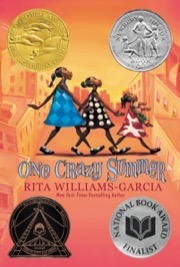
One Crazy Summer
by Rita Williams-Garcia
Same genre (historical). Same pacing (slow burn to explosive)
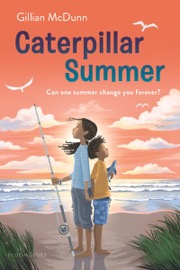
Caterpillar Summer
by Gillian McDunn
Same pacing (slow burn to explosive). Same emotional weight (heavy)
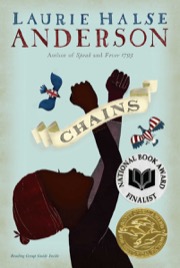
Chains
by Laurie Halse Anderson
Same genre (historical). Same pacing (slow burn to explosive)
Featured in our guides
Want more picks like this?
Get 5 hand-picked book reviews for your child's age — one email a month.