
The Neverending Story
by Michael Ende
A bullied, bookish boy opens a stolen book and finds himself written into the story — a classic meta-fictional fantasy about imagination, identity, and the cost of every wish.
The story
Bastian is a shy, grieving ten-year-old who ducks into a bookshop to hide from bullies and steals a strange copper-colored book. What begins as an adventure story about a young hero racing to save a dying magical land becomes something stranger when Bastian discovers the story is reading him back — and that stepping into it will give him everything he ever wished for. The catch is that each wish costs a memory of who he used to be. Michael Ende's 1979 novel is a richly imagined fantasy and a meditation on how desire works on a person over time. Translated from the German by Ralph Manheim.
Age verdict
Best fit 10-12, with sensitive readers welcome at 11+ with a parent nearby for debrief.
Our take
Classic literary-fantasy — strong and balanced across all three lenses, with parent-depth and creative-spark slightly above the kid-engagement baseline, and length limiting the teacher total.
What stands out
Each audience's top 3 dimensions. Out of 30 scored per book.
Kids love
- New world unlocked Exceptional
Fantastica is not just a fantasy world — it is a world-about-worlds, a metaphysical ecology where stories themselves are the substrate and a wish-mechanic (every wish costs a memory of the wisher's real self) creates a second set of rules layered on top of the first. The amulet's two-snakes motif, the twenty-six alphabet chapters, and a rotating cast of oracles give the novel a mythology-density unmatched in middle-grade fantasy. Sits at Artemis Fowl (10, fully-realized fairy civilization with its own laws) territory, with the distinction that this world is also structurally recursive — one of the genuinely unique imaginative achievements in the genre.
- Heart-punch Exceptional
An early-book scene of a faithful companion sinking slowly into a swamp of despair is one of the most widely-remembered traumatic moments in middle-grade fantasy, and it is only the first of several earned emotional peaks — a father-son reconciliation, a delayed shared mourning for an absent mother, and a corruption-and-return arc that mixes shame with self-forgiveness. Sustained emotional architecture across 400 pages matches A Court of Mist and Fury (9, devastating architecture) territory; not quite Tristan Strong (10, grief as constant engine) because the emotional peaks alternate with wonder and adventure rather than building uninterruptedly.
Parents love
- Moral reasoning Exceptional
The back half is an extended parable about the ethics of self-indulgence: every wish the protagonist makes costs one memory of his real life, and the book takes this mechanic to its logical endpoint in a City of Old Emperors where former wishers sit drooling and silent, having wished away everything they once were. A scene roughly three-quarters in stages a real moral injury between the two heroes that is not easily forgiven. Fits Artemis Fowl (9, moral complexity without easy answers) territory; short of We'll Always Have Summer (10, sustained moral territory across entire book) because the moral architecture is parabolic rather than realist.
- Emotional sophistication Exceptional
The book models emotional mixtures that most middle-grade fantasy avoids — grief and helplessness braided with guilt in an early death scene, a corruption arc that explores shame alongside the lure of self-importance, a reconciliation scene in which a father and son grieve an absent mother together for the first time, and a slow return-to-oneself that models self-forgiveness without cheap forgiveness. Matches Children of Blood and Bone (9, contradictory emotions held simultaneously) for sophistication; shy of Coyote Sunrise (10, unusual level for MG) only because the emotional work is allegorical more often than conversational.
Teachers love
- Classroom versatility Strong
Works across a surprising number of instructional slots — novel study for grades 5-8, a metafiction unit for middle-school literature, a poetry-unit anchor via the rhymed oracle chapter, a mythology comparison anchor, and a mentor-text source for fantasy world-building. The translated-classic status and cross-curricular reach make it rare for a fantasy novel. Matches Eyes That Kiss in the Corners (8, multiple-grade entry points) for versatility, short of A Wolf Called Wander (10, works effectively for the full spread of classroom uses) because the length limits independent-reading usage for weaker readers.
- Mentor text quality Strong
Multiple passages are canonical mentor texts — the opening paragraph for setting-as-mood, the early-book death scene for sentence-level restraint, the three-gates sequence for escalating-obstacle design, the midpoint recursion for metafictional framing. Each passage demonstrates a distinct, teachable craft technique. Matches A Tale Dark and Grimm (8, opening as voice-establishment masterclass) for mentor-text range, not quite the five-distinct-techniques density of City of Bones (10) because the teachable moments are spread across a long book rather than concentrated in an exemplary opening.
✓ Perfect for
- • bookish readers who already love fantasy and want their next 'real' book
- • families looking for a read-together classic with genuine emotional depth
- • readers drawn to stories about imagination, identity, and the power of reading itself
- • fans of the 1984 film adaptation who want the richer original story
- • readers ready for a longer challenge with philosophical underpinnings
Not ideal for
Reluctant readers, kids who need action on every page, or highly sensitive children who may be distressed by the early-book swamp scene and later erasure-of-self sequences.
⚠ Heads up
At a glance
- Pages
- 396
- Chapters
- 26
- Words
- 110k
- Lexile
- 930L
- Difficulty
- Challenging
- POV
- Third Person Omniscient
- Illustration
- Sparse
- Published
- 1979
- Illustrator
- Roswitha Quadflieg
Mood & style
You'll know it worked when…
Readers who fall in love with the first-half quest usually keep going through the harder second half; readers who bounce off the dense middle often set it down — both responses are normal for this book.
If your kid loved "The Neverending Story"
Matched across 30 dimensions — interest hooks, character appeal, tone, pacing, emotional core. Not by what other people bought. By what fits the same reader profile.

The Christmas Pig
by J. K. Rowling
Same genre (fantasy). Both bittersweet in tone
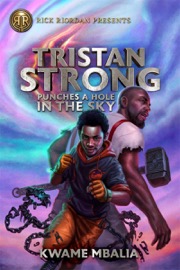
Tristan Strong Punches a Hole in the Sky
by Kwame Mbalia
Same genre (fantasy). Same pacing (rollercoaster)
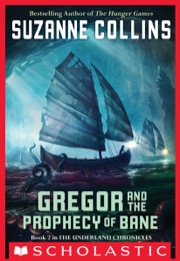
Gregor and the Prophecy of Bane
by Suzanne Collins
Same genre (fantasy). Same pacing (rollercoaster)
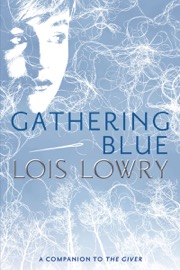
Gathering Blue
by Lois Lowry
Same genre (fantasy). Both bittersweet in tone
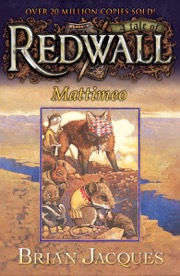
Mattimeo
by Brian Jacques
Same genre (fantasy). Same pacing (rollercoaster)
Harry Potter and the Deathly Hallows
by J.K. Rowling
Same genre (fantasy). Same pacing (rollercoaster)
Want more picks like this?
Get 5 hand-picked book reviews for your child's age — one email a month.