
The Magic Finger
by Roald Dahl
Roald Dahl's sharpest little role-reversal fable — an 8-year-old girl, a hunting family, and a finger that won't stay still when she gets angry.
The story
An eight-year-old girl narrates what happened to the hunting-mad Gregg family when she finally lost her temper. Her 'Magic Finger' — a supernatural power she cannot fully control — sets the events of the story in motion. Told with Dahl's signature compression, grotesque-warm humour, and Quentin Blake's line-drawings on every spread, The Magic Finger delivers a classic empathy lesson with moral teeth and a sharp final page that asks whether the lesson is ever really over.
Age verdict
Best fit 7-9; works as read-aloud from 6 and still entertains up to 10-11. An ideal entry point into the wider Roald Dahl canon.
Our take
Teacher-favored classic — read-aloud, writing-prompt, and empathy-engine strengths push the teacher lens highest, with strong kid engagement and moderate parent value (held back by low Lexile and narrow real-world window).
What stands out
Each audience's top 3 dimensions. Out of 30 scored per book.
Kids love
- Laugh-out-loud Strong
Four humor channels run in parallel: voice-driven (narrator's fourth-wall self-correction), slapstick-of-transformation (adults with wings flapping the wrong way), grotesque food comedy ('Lovely slugburgers. Delicious wormburgers.' page 18), and wordplay (Gregg→Egg rename). Plus Quentin Blake visual gags as a fifth channel. Sits at Babymouse Goes for the Gold (8, four humor channels per page) level — just below Dog Man (10, five-channel comedy).
- Mental movie Strong
Visual concreteness is unusually strong for 7,000 words: 'a pair of duck's wings instead' page 10, 'four enormous wild ducks... as big as men' page 13, 'sixteen tiny mounds of soil' page 27, and the painterly colour-sequence 'blue, to green, to red, and then to gold' page 25. Quentin Blake's on-every-spread illustrations sit at Lunch Lady and the Cyborg Substitute (8, fully illustrated) density and pull the mental movie into full render.
Parents love
- Reading gateway Strong
30 pages of large-print text, Quentin Blake illustrations on every spread, famous author-brand, and a moral hook that grabs on page 4 — a textbook bridge from early-reader to middle-grade. Matches A Bear Called Paddington (8, short illustrated chapters, episodic accessibility) as a classic gateway; below Frog and Toad Together (9, I-Can-Read-Level-2) because Magic Finger requires slightly more reading stamina. Natural on-ramp to the wider Dahl canon.
- Creative spark Strong
'What would you do with a Magic Finger?' is one of the most iconic writing prompts in children's literature — the book's central conceit is itself a creative-spring. The role-reversal structure models divergent thinking (any cruelty → reverse it → see what it teaches), and the nest-building problem (build a nest with no hands) is a creative-constraint puzzle. Sits at Boy at the Back of the Class (8, escalating kid ideas) for prompt strength, just below InvestiGators (10, constant mash-up invention).
Teachers love
- Read-aloud power Exceptional
Dahl wrote deliberately for oral delivery — call-and-response cadences ('BANG! BANG! BANG! BANG!' page 7, 'Oh, dear! Oh, dear!' page 10, 'I will! I will!' page 23), caps and italics as dynamic markers, short paragraphs as rests, direct address ('I shall now tell you'). Four clearly distinct dialogue registers (narrator's dry / ducks' cool / Mr Gregg's panicked / Mrs Gregg's sobbing) a single reader can voice. Sits at Sylvester and the Magic Pebble (9, designed for oral delivery) — just below Interrupting Chicken (10, built explicitly for performance).
- Writing prompt potential Strong
'What would you do with a Magic Finger?' has been the canonical classroom prompt from this book for 50+ years. Additional strong prompts: write a letter from a duck to Mr Gregg, rewrite the ending so the narrator learns too, describe your first night in a nest. Sits at Interrupting Chicken (9, ultimate writing prompt — invites students to interrupt) for prompt-as-invitation power, just a step below because this book's prompt is inherent rather than modeled.
✓ Perfect for
- • Strong 7-9 year-old readers bridging from early readers to middle-grade chapter books
- • Dahl fans looking for a short Dahl between Matilda and Charlie
- • Animal-loving kids who want magical justice on the page
- • Reluctant readers who need a famous-author, heavily illustrated, 30-page win
- • Classrooms running empathy, ecology, or persuasive-writing units
Not ideal for
Very sensitive readers under 7 who may be unsettled by the teacher's permanent fate, guns pointed at children in the climactic scene, or the narrator's unresolved ending. Readers wanting a warm-bath Dahl (Fantastic Mr Fox) may find this one more morally pointed than cosy.
⚠ Heads up
At a glance
- Pages
- 64
- Chapters
- 13
- Words
- 7k
- Lexile
- 560L
- Difficulty
- Easy
- POV
- First Person
- Illustration
- Heavy
- Published
- 1966
- Illustrator
- Quentin Blake
Mood & style
You'll know it worked when…
Most readers finish this in a single sitting (30-60 minutes). Kids who laugh at the slugburger scene or the fourth-wall opening are locked in; kids unsettled by the teacher-disfigurement episode early on may want an adult nearby.
If your kid loved "The Magic Finger"
Matched across 30 dimensions — interest hooks, character appeal, tone, pacing, emotional core. Not by what other people bought. By what fits the same reader profile.
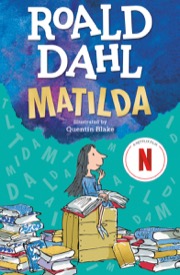
Matilda
by Roald Dahl
Same genre (fantasy). Both whimsical in tone
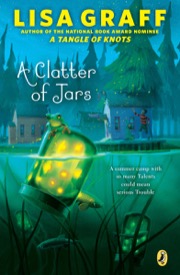
A Clatter of Jars
by Lisa Graff
Same genre (fantasy). Both whimsical in tone
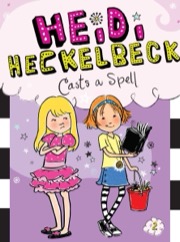
Heidi Heckelbeck Casts a Spell
by Wanda Coven
Same genre (fantasy). Same emotional weight (moderate)
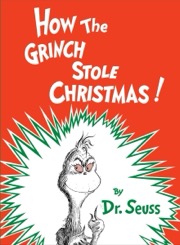
How the Grinch Stole Christmas!
by Dr. Seuss
Same genre (fantasy). Both whimsical in tone
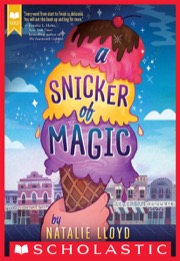
A Snicker of Magic
by Natalie Lloyd
Same genre (fantasy). Both whimsical in tone
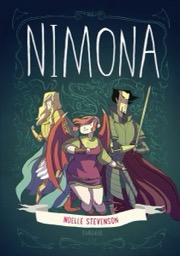
Nimona
by N.D. Stevenson
Same genre (fantasy). Same emotional weight (moderate)
Want more picks like this?
Get 5 hand-picked book reviews for your child's age — one email a month.