
Flashback Four #1: The Lincoln Project
by Dan Gutman · Flashback Four #1
A fast-moving time-travel adventure that drops four modern kids into the real texture of Gettysburg in 1863.
The story
Four 12-year-olds from very different Boston lives are recruited by a brilliant, ailing tech CEO to test an experimental time-travel device by photographing Abraham Lincoln delivering the Gettysburg Address. What sounds like a simple camera run becomes an uneasy crash course in Civil War reality — a scarred farm, a chaotic presidential household, a jittery wartime town — forcing the team to use their wits (and a little mercy) to get home. Book one of a four-book series that pairs action with genuine historical homework.
Age verdict
Best 9-12. Confident 8-year-olds with I Survived experience will manage; younger than 8 is a stretch because of war imagery and a scene involving mistaken-identity arrest.
Our take
accessible historical adventure with strong cross-curricular hooks; kid appeal and teacher utility track together, with parent value slightly behind due to workmanlike prose and low re-read pull
What stands out
Each audience's top 3 dimensions. Out of 30 scored per book.
Kids love
- First-chapter grab Strong
The yellow-envelope mystery with twenty dollars and a summons to a mysterious Boston tower pulls four kids (and the reader) in within pages — stronger than The 39 Clues opening (7, inheritance-reveal setup) because it withholds the stakes just long enough to build curiosity; falls short of Holes (10, compact mystery layering) because the payoff arrives fast rather than deepening.
- New world unlocked Strong
Layering real Civil War texture (5,000 dead horses, unexploded ordnance, burial detail PTSD, the Wills house, Tad Lincoln's chaos) on top of accessible time-travel science genuinely expands a 9-12 reader's mental map — in the same tier as Number the Stars (8, historical immersion) and ahead of most series openers.
Parents love
- Real-world window Strong
Dense historical specificity — Gettysburg Address text, Everett's two-hour speech, battlefield casualty counts, ambrotype photography, the Wills house, slavery in a border state — delivers the non-fiction freight of Laurie Halse Anderson's Fever 1793 (8, period authenticity) and outpaces most series time-travel entries.
- Stereotype-breaker Strong
David's anxiety about being a Black kid in 1863 is taken seriously rather than waved off; Julia evolves beyond the rich-girl caricature; Lincoln is humanized rather than monument-ed — more thoughtful than The Magic Tree House (5, archetypes) and in the neighborhood of Brown Girl Dreaming (8, nuanced identity work).
Teachers love
- Reluctant reader rescue Strong
Short chapters, cliffhanger endings, fast hook, 700L Lexile, sports tie-in for basketball fans, and a bake-in of high-interest content (time travel, mystery) make this exactly the I Survived (8) tier of reluctant-reader bait.
- Cross-curricular value Strong
Naturally spans history (Civil War, Gettysburg Address, slavery), science (time-travel physics, ambrotype chemistry), and sports history (Wilt Chamberlain's 100-point game) — matches Magic Tree House Fact Tracker pairings (7) and arrives already integrated inside a narrative.
✓ Perfect for
- • kids who loved I Survived and are ready for a longer narrative
- • reluctant readers who respond to mystery hooks and short chapters
- • history-curious 9-12 year-olds, especially those interested in the Civil War or the American presidency
- • sports fans (an early chapter dramatizes Wilt Chamberlain's 100-point game)
- • classrooms pairing a narrative with a Gettysburg Address close-read
Not ideal for
sensitive younger readers who find brief battlefield imagery (a dead horse, a burial worker's account) or an execution-threat jail scene unsettling; readers seeking literary prose craft over plot-engine storytelling.
⚠ Heads up
At a glance
- Pages
- 240
- Chapters
- 21
- Words
- 62k
- Lexile
- 700L
- Difficulty
- Moderate
- POV
- Third Person Omniscient
- Illustration
- Sparse
- Published
- 2016
Mood & style
You'll know it worked when…
If a child enjoys the first four chapters (mystery invitation → arrival in Boston → first time-travel test), the rest of the book will hold them; the complications escalate rather than slow down.
If your kid loved this
Matched across 30 dimensions — interest hooks, character appeal, tone, pacing, emotional core. Not by what other people bought. By what fits the same reader profile.
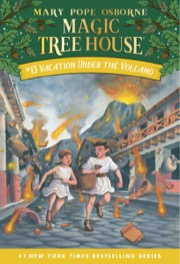
Vacation Under the Volcano
by Mary Pope Osborne
Same genre (historical). Both adventurous in tone
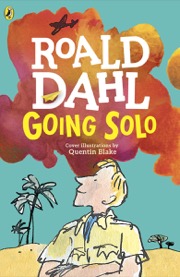
Going Solo
by Roald Dahl
Same genre (historical). Both adventurous in tone
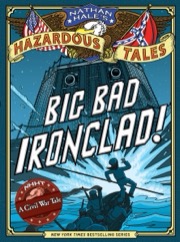
Big Bad Ironclad!
by Nathan Hale
Same genre (historical). Both adventurous in tone

The Boys in the Boat (Young Readers Adaptation)
by Daniel James Brown
Same genre (historical). Shared humor: gentle wit
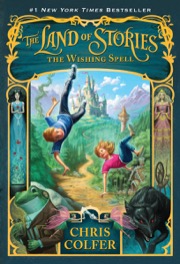
The Wishing Spell
by Chris Colfer
Both adventurous in tone. Same pacing (steady clip)
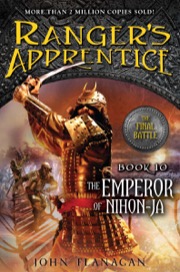
The Emperor of Nihon-Ja
by John Flanagan
Both adventurous in tone. Same pacing (steady clip)
Want more picks like this?
Get 5 hand-picked book reviews for your child's age — one email a month.