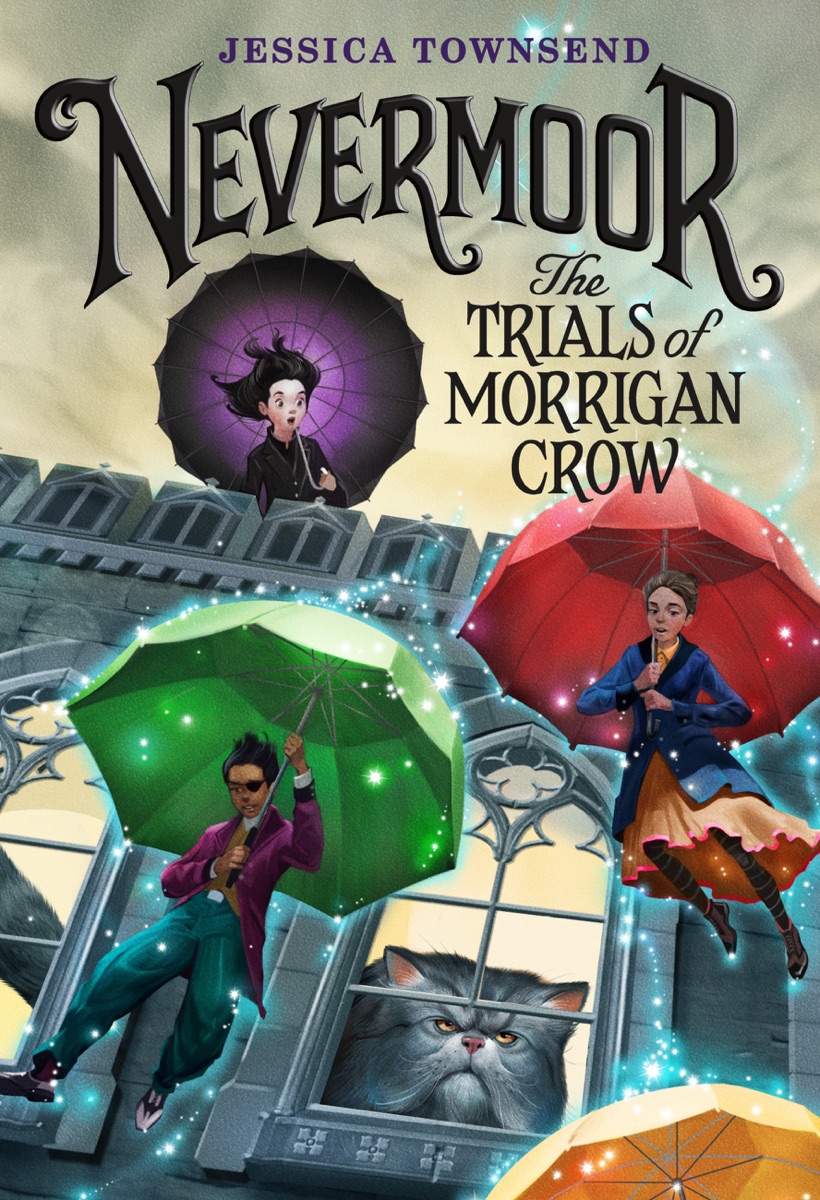
Nevermoor: The Trials of Morrigan Crow
by Jessica Townsend · Nevermoor #1
A richly imagined fantasy about a girl who discovers that the world's worst label was hiding the world's greatest gift
The story
Eleven-year-old Morrigan Crow has been told she's cursed — blamed for every local misfortune and destined to die on her eleventh birthday. When a mysterious stranger whisks her away to a hidden magical city and enters her in a competition to join an elite society, she must prove her worth through a series of dangerous trials while a powerful enemy pursues her for reasons she doesn't yet understand.
Age verdict
Best for ages 9-12; the emotional complexity and length reward patient readers, while the scary supernatural sequences are intense but always resolved with adult protection.
Our take
A richly imagined fantasy world that captivates kids with its immersive setting and emotional depth while offering strong literary and discussion value for adults
What stands out
Each audience's top 3 dimensions. Out of 30 scored per book.
Kids love
- Mental movie Exceptional
muted, orderly Republic vs. sensory-rich magical city with impossible architecture, bioluminescent streets, sentient hotel, shadowy hunts. Sits below 5 Worlds because: 5 Worlds' five distinct painted worlds rival most immersive fantasy. Sits at 9 because: Nevermoor's visual world is vivid and detailed but constrained to dual-realm (mundane + magical), not quintuple worldscale; sensory detail is selective and evocative rather than comprehensive.
- New world unlocked Exceptional
Comparable to Artemis Fowl — Nevermoor creates fully realized secondary world with geography, political systems (the Wundrous Society), magical taxonomy (Wunder, Wundersmiths), and social structures (patronage system, candidacy trials). Sits below Artemis because: Artemis's fairy civilization system (underground police, hierarchy of spirits, technology parallels) is more densely constructed than Nevermoor's world. Sits at 9 because: Hotel Deucalion and the impossible city invite same sustained imaginative engagement as most beloved fantasy worlds; world feels complete and inhabitable despite being first-book exposition.
Parents love
- Re-read durability Exceptional
Comparable to A Court of Mist and Fury , triangulated with Brave New World — Late-book revelation about Morrigan's Wundersmith nature recontextualizes preceding chapters; rereading reveals foreshadowing and hints. Comforting voice and rich world-building create annual comfort-read appeal. Sits below ACOTAR because: Nevermoor's dramatic irony is less saturated than ACOTAR's throughout; ACOTAR rewards rereading at sentence level. Sits at 9 because: Structural rereading reward is genuine; world richness sustains revisits; emotional safety enables comfort-reading behavior.
- Writing quality Strong
Comparable to Interrupting Chicken — Genuinely literary prose with varied sentence rhythm, precise sensory detail (opening's 'the kitchen cat was dead'), and skilled pacing between trials and character moments. Sits below Interrupting Chicken because: Interrupting Chicken is explicitly designed for picture-book-level sentence control; Nevermoor's 384-page prose is strong but more conventionally literary than masterclass-level. Sits at 8 because: Prose rewards rereading for language itself; transition between two worlds showcases tonal management; multiple passages demonstrate skill beyond competent storytelling.
Teachers love
- Read-aloud power Strong
Morrigan's sardonic narration, Jupiter's warm enthusiasm, Squall's cultured menace give teachers distinct characters to voice. Natural chapter breaks fit class periods; escalating tension in trial sequences holds group attention. Sits at because: Both offer strong voice variation and natural chapter structure; Gathering Blue's prose reads aloud beautifully with rhythm variation, matching Nevermoor's chapter pacing.
- Discussion fuel Strong
Is it mercy to harm to prevent suffering? How do communities create scapegoats? Should mentors keep truths secret to protect someone? Students arrive at different answers based on experiences and values. Sits at because: All three books create authentic moral disagreement rather than easy consensus; discussion fuel is sustained and real.
✓ Perfect for
- • Readers who loved the immersive world-building of Harry Potter and want a fresh magical world to inhabit. Kids who feel like outsiders and want to see a character discover she's extraordinary in ways nobody expected.
Not ideal for
Readers who prefer fast-paced action or humor-driven stories — this book builds its world and emotions at a deliberate pace across 384 pages.
⚠ Heads up
At a glance
- Pages
- 384
- Chapters
- 27
- Words
- 120k
- Lexile
- 790L
- Difficulty
- Moderate
- POV
- Third Person Limited
- Illustration
- Sparse
- Published
- 2017
- Publisher
- Little, Brown Books for Young Readers
- ISBN
- 9780316508896
Mood & style
You'll know it worked when…
Most readers who make it past the first three chapters will finish — the mystery of Morrigan's true nature creates a powerful pull-through effect that sustains even through quieter middle sections.
If your kid loved this
Matched across 30 dimensions — interest hooks, character appeal, tone, pacing, emotional core. Not by what other people bought. By what fits the same reader profile.
Skandar and the Unicorn Thief
by A.F. Steadman
Same genre (fantasy). Same emotional weight (moderate)

Charmed Life
by Diana Wynne Jones
Same genre (fantasy). Same pacing (slow burn to explosive)
Spirit Animals Book 1: Wild Born
by Brandon Mull
Same genre (fantasy). Same pacing (slow burn to explosive)
A Snake Falls to Earth
by Darcie Little Badger
Same genre (fantasy). Both hopeful in tone
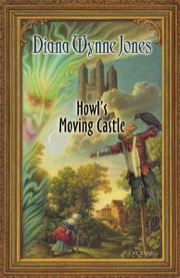
Howl's Moving Castle
by Diana Wynne Jones
Same genre (fantasy). Same emotional weight (moderate)
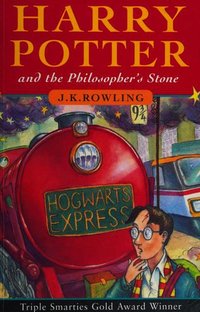
Harry Potter and the Philosopher's Stone
by J.K. Rowling
Same genre (fantasy). Same emotional weight (moderate)
Want more picks like this?
Get 5 hand-picked book reviews for your child's age — one email a month.