
Jigsaw Jones The Case of Hermie the Missing Hamster
by James Preller · Jigsaw Jones Mysteries #1
A kid detective with a puzzle obsession and a loyal partner takes on neighborhood mysteries for a dollar a day.
The story
When his neighbor's pet hamster goes missing, second-grader Jigsaw Jones takes the case. With his partner Mila, he interviews suspects, researches at a pet store and library, follows false leads, and uses creative problem-solving to crack the mystery. Along the way, he confronts his fears, learns that assumptions need evidence, and discovers that solutions can bring unexpected joy to an entire community.
Age verdict
Best for ages 6-8. Gentle content, accessible language, and a satisfying mystery format make this an ideal bridge to independent chapter book reading.
Our take
Strong classroom utility with solid kid engagement but modest literary/growth depth — a well-crafted teaching tool that kids enjoy.
What stands out
Each audience's top 3 dimensions. Out of 30 scored per book.
Kids love
- Ending satisfaction Strong
The resolution delivers a triple payoff: the mystery is solved with a joyful twist that transforms perceived tragedy into new life, the protagonist is publicly honored for his work, and his generosity benefits his school community. Every thread closes completely while opening to future adventures. Stronger than A Deadly Education (7, thrilling climax) and approaching Mercy Watson (8, every thread resolves) in completeness and emotional satisfaction.
- First-chapter grab Solid
Jigsaw's voice-driven opening immediately establishes a detective conceit with self-aware humor, and a client arrives with a real problem within the first page. The hook is character-based rather than action-based, landing between Sunny Rolls the Dice (5, anxious internal voice) and All the Broken Pieces (7, immediate emotional stakes). Solid grab but not explosive.
Parents love
- Reading gateway Strong
Short chapters of three to seven pages, a conversational first-person voice, humor on nearly every page, and an immediately graspable premise make this highly accessible. The mystery format pulls reluctant readers forward with built-in curiosity. Similar to Clementine (7, short chapters, conversational voice, illustrations throughout) as an effective bridge to independent reading — stronger than City Spies (6, short chapters and stakes) in accessibility for younger readers.
- Moral reasoning Solid
The investigation sequence teaches evidence-based thinking naturally — the protagonist learns that assumptions without complete evidence can mislead, takes responsibility for property damage, and uses his solution to benefit his community. Similar to Mercy Watson (5, understanding what someone truly needs) in embedding moral reasoning into story action.
Teachers love
- Reluctant reader rescue Strong
Short illustrated chapters, conversational humor, a relatable kid-detective premise, and Lexile 410L remove barriers for struggling readers. The mystery format creates built-in forward pull through curiosity. Similar to Clementine (7, short chapters and conversational voice) and approaching Babymouse (8, graphic format with constant humor) as an effective reluctant-reader bridge — stronger than Artemis Fowl (6, concept-driven hook) for the early reader demographic.
- Read-aloud power Solid
Conversational first-person narration with natural rhythm translates smoothly to oral delivery. Dialogue-heavy confrontation scenes are highly performable with distinct character voices and short punchy sentences creating performance rhythm. Similar to A Court of Mist and Fury (6, rhythmically strong prose with performable dialogue) in read-aloud quality, especially effective for early elementary audiences.
✓ Perfect for
- • early chapter book readers ready for their first mystery series
- • kids who love puzzles and problem-solving
- • reluctant readers who need short chapters and humor to stay engaged
- • classroom read-alouds in grades 1-3
Not ideal for
Readers seeking complex plots, advanced vocabulary, or heavy emotional depth will find this too simple. Not suitable for readers above grade 4 unless significantly below reading level.
At a glance
- Pages
- 76
- Chapters
- 12
- Words
- 13k
- Lexile
- 410L
- Difficulty
- Easy
- POV
- First Person
- Illustration
- Sparse
- Published
- 1998
- Illustrator
- R. W. Alley
Mood & style
You'll know it worked when…
Most readers will finish in 1-2 sittings. The mystery format creates natural pull to the resolution.
If your kid loved this
Matched across 30 dimensions — interest hooks, character appeal, tone, pacing, emotional core. Not by what other people bought. By what fits the same reader profile.
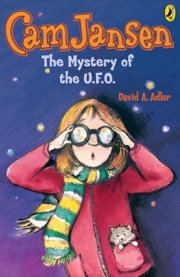
Cam Jansen: The Mystery of the U.F.O.
by David A. Adler
Same genre (mystery). Same pacing (steady clip)

Encyclopedia Brown and the Case of the Secret Pitch
by Donald J. Sobol
Same genre (mystery). Both playful in tone
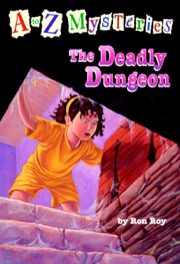
A to Z Mysteries: The Deadly Dungeon
by Ron Roy
Same genre (mystery). Same pacing (steady clip)
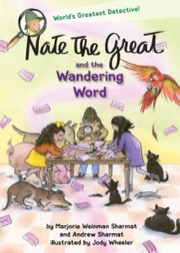
Nate the Great and the Wandering Word
by Marjorie Weinman Sharmat and Andrew Sharmat
Same genre (mystery). Same pacing (steady clip)
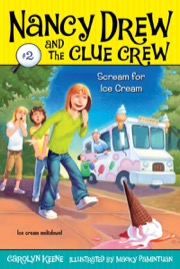
Scream for Ice Cream
by Carolyn Keene
Same genre (mystery). Both playful in tone
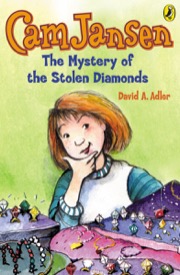
Cam Jansen: The Mystery of the Stolen Diamonds
by David A. Adler
Same genre (mystery). Same pacing (steady clip)
Want more picks like this?
Get 5 hand-picked book reviews for your child's age — one email a month.