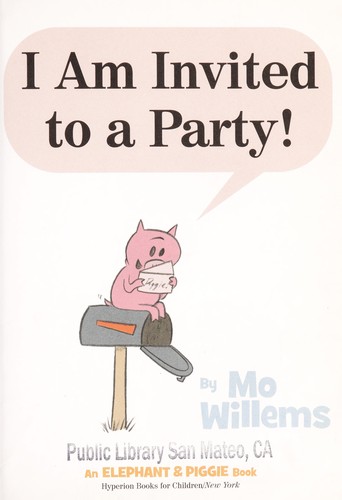
I Am Invited to a Party!
by Mo Willems · Elephant & Piggie #3
A laugh-out-loud picture book about friendship, worry, and the joy of being yourself
The story
When Piggie gets invited to her very first party, she asks her best friend Gerald to come along. Gerald claims to be a party expert, but his escalating worries about what type of party it might be lead to increasingly elaborate — and hilarious — preparations. Through costume changes and mounting anxiety, the two friends face what seems like an impossible situation.
Age verdict
Best for ages 4-6. Works beautifully as a read-aloud for ages 3-7. Most kids over 7 will find it too short unless they're series fans.
Our take
A teacher-favored picture book with outstanding read-aloud power and gateway reading value. Strong kid entertainment through humor and visual storytelling, but limited parent growth metrics due to picture book vocabulary constraints and gentle emotional scope.
What stands out
Each audience's top 3 dimensions. Out of 30 scored per book.
Kids love
- First-chapter grab Strong
Comparable to Lunch Lady and the Cyborg Substitute — Both open in emotionally grounded, relatable spaces (school cafeteria vs. party invitation) with immediate character energy. Piggie's breathless 'Gerald! Look! Look! I am invited to a party!' on page 7 mirrors Lunch Lady's immediate grounding in kid-world stakes. Sits at anchor because both create instant emotional investment through voice alone without setup.
- Character voice Strong
A Cautionary Tale — Both establish three distinct voices in minimal text through dialogue and exclamations alone. Piggie's staccato 'Gerald! Look! Look!' contrasts sharply with Gerald's measured 'I know parties' and Trixie's urgent pleas in Knuffle Bunny ('Aggle flaggle klabble!'). Both books prove that picture-book format demands voice clarity, and both achieve it. Sits at anchor—voices are equally recognizable without illustration context.
Parents love
- Reading gateway Exceptional
Comparable to Frog and Toad Together — Both are designed explicitly as gateway books. Minimal text (300 words, 64 pages; Frog and Toad is similar density), maximum illustration, dialogue-driven format, repetitive patterns, genuine humor, speech-bubble layout that feels more like conversation than reading. Both are I Can Read Level 2 (or equivalent). The book is perfect for emerging readers—short length, clear patterns, visual storytelling support. Sits at anchor—this is gateway perfection for the 4-7 demographic.
- Re-read durability Strong
Off the Hook , triangulated with Alma and How She Got Her Name — The rhythmic patterns ('I know parties,' 'PARTY! PARTY!' 'What if') make this re-readable, and re-reads reveal foreshadowing (page 52's doubt). Alma's re-read reveals hidden plot (Abuela's backstory). InvestiGators' visual jokes reward a second pass. This book's re-read value comes from rhythm and emotional subtext, not hidden detail. Young children request this book repeatedly. Sits at Alma level—re-read durability is solid through pattern and emotional depth.
Teachers love
- Read-aloud power Exceptional
Comparable to Interrupting Chicken and Sylvester and the Magic Pebble — Designed explicitly for performance read-aloud. The two distinct voices invite dramatic reading (Piggie's energy vs. Gerald's measured tone). The 'PARTY! PARTY!' chant becomes audience-participation moment. 10-minute completion time is perfect for classroom read-aloud. Interrupting Chicken is best-in-class; Sylvester is designed for oral delivery. This book sits at Sylvester level—natural read-aloud musicality with built-in performance opportunities.
- Reluctant reader rescue Strong
The Scarlet Shedder and Diary of a Wimpy Kid: Hard Luck — Picture-book format with speech bubbles, minimal text per page, strong visual storytelling, consistent humor, 10-minute completion time make this highly accessible. The predictable pattern builds reading confidence. Dog Man is the gold standard; Wimpy Kid is nearly as powerful. This book sits just below both—the formula works perfectly, but it lacks Dog Man's pop-culture reach or Wimpy Kid's sustained series momentum.
✓ Perfect for
- • Early readers ready for their first independent books
- • Kids who love silly humor and expressive illustrations
- • Children who worry about new social situations
- • Read-aloud time with preschoolers and kindergarteners
- • Fans of the Elephant & Piggie series
Not ideal for
Older readers looking for chapter books or complex plots — this is a brief picture book designed for the youngest readers and listeners.
At a glance
- Pages
- 64
- Words
- 0k
- Lexile
- 210L
- Difficulty
- Easy
- POV
- Third Person Limited
- Illustration
- Fully Illustrated
- Published
- 2007
- Publisher
- Hyperion Books for Children
- Illustrator
- Mo Willems
- ISBN
- 9781423106876
Mood & style
You'll know it worked when…
A child can finish this independently in 5-10 minutes, or enjoy it as a single read-aloud session.
If your kid loved "I Am Invited to a Party!"
Matched across 30 dimensions — interest hooks, character appeal, tone, pacing, emotional core. Not by what other people bought. By what fits the same reader profile.
Fly Guy and the Frankenfly
by Tedd Arnold
Same genre (comedy). Both playful in tone
Don't Let the Pigeon Drive the Bus!
by Mo Willems
Same genre (comedy). Both playful in tone
Frog and Toad Together
by Arnold Lobel
comedy as secondary genre. Same emotional weight (light)
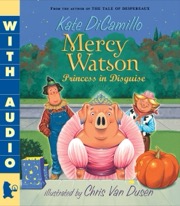
Mercy Watson: Princess in Disguise
by Kate DiCamillo
Same genre (comedy). Same pacing (rapid fire)
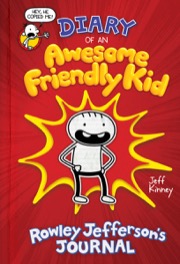
Diary of an Awesome Friendly Kid: Rowley Jefferson's Journal
by Jeff Kinney
Same genre (comedy). Both playful in tone
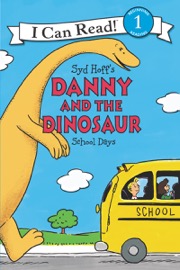
Danny and the Dinosaur: School Days
by Syd Hoff
Same genre (comedy). Same pacing (rapid fire)
Want more picks like this?
Get 5 hand-picked book reviews for your child's age — one email a month.