
Grace Hopper: Queen of Computer Code
by Laurie Wallmark · People Who Shaped Our World #1
A vivid picture-book biography of the woman who coined 'computer bug' and taught computers to understand words
The story
This 48-page picture-book biography follows Grace Hopper — mathematician, Navy admiral, and computer pioneer — from childhood tinkering through her programming breakthroughs. Young Grace takes apart every clock in the house, overcomes a Latin failure, persuades the Navy to accept her during WWII, and invents FLOW-MATIC, a program that lets computers understand English commands. Laurie Wallmark's rhythmic prose and Katy Wu's bold digital illustrations make computer science feel accessible and adventurous, with a back-matter timeline and bibliography that extend the learning.
Age verdict
Best at 7-10 for independent reading; 5-6 with an adult reader; through 12 for readers using the back matter for research.
Our take
Teacher-strong STEM picture book biography. Kids get a solid character-driven introduction to a STEM pioneer; parents get rich real-world content and vocabulary; teachers get the most mileage — cross-curricular anchor text with strong project and mentor-text potential.
What stands out
Each audience's top 3 dimensions. Out of 30 scored per book.
Kids love
- Ending satisfaction Strong
The closing loops Grace's achievements into the 'Amazing Grace' nickname while the timeline and author's note provide contextual closure and a forward-looking sense of legacy. Comparable to A Deadly Education (7, thrilling earned climax) in completeness for its format, above Gathering Blue (6, morally complex) though below Wolf Called Wander (9, full-circle) on emotional payoff.
- New world unlocked Solid
For many young readers this is first encounter with Grace Hopper, early computer history, WWII-era STEM, FLOW-MATIC, and the moth-bug origin — comparable to InvestiGators (6, anthropomorphic secret-agent city) as a gateway to a rich unfamiliar space, approaching Earthquake in the Early Morning (8, first encounter with 1906 disaster) but narrower in scope.
Parents love
- Real-world window Strong
Comprehensive historical window — WWII Navy service, 1906-1992 timeline, Vassar/Yale academic life, the Mark I/II and UNIVAC computers, gender barriers in mid-century STEM, 'Husbands and Wives' curricula as cultural artifact. Matches Earthquake in the Early Morning (8, historical-disaster window in beginning chapter books) in richness, approaching Lafayette (9, comprehensive Revolutionary War).
- Vocabulary builder Strong
STEM and precision vocabulary is woven in contextually — 'colossal,' 'tinker,' 'blueprint,' 'propeller,' 'deafening,' 'barnstormer,' 'admiral,' 'FLOW-MATIC' — all anchored to images and actions so a 5-10 reader can infer meaning. Sits at Amal Unbound (7, cultural vocabulary introduced naturally) level, above City Spies (5, accessible prose) but below Tale Dark and Grimm (8, fairy-tale register).
Teachers love
- Classroom versatility Strong
Hits multiple curriculum slots — STEM/computer science, biography, women's history, American history (WWII), picture-book study, narrative nonfiction — with clear entry points for grades 2-5 at different depth levels. Comparable to Eyes That Kiss in the Corners (8, works across K-5 with different entry points) for versatility inside picture-book format.
- Cross-curricular value Strong
Integrates history (WWII, computer evolution 1944-1991), mathematics and computer science (Grace's education, programming concepts), women's history and gender studies (academic and military barriers), and engineering (clocks, FLOW-MATIC). Comparable to The Maze Runner (8, multi-discipline reach) for cross-curricular richness, approaching Wolf Called Wander (10).
✓ Perfect for
- • STEM-curious kids ages 6-10
- • young readers drawn to biographies of pioneers and inventors
- • classrooms running women's history, biography, or computer-science units
- • parents looking for role-model stories about women in math and engineering
- • readers who loved Ada Byron Lovelace and the Thinking Machine or Andrea Beaty's Rosie Revere, Engineer
Not ideal for
Children who need plot twists or comedic energy to stay engaged — this is a thoughtful, rhythmic biography, not a humor-driven or suspense-driven story. Also not ideal for very young readers (under 5) who may find the vocabulary and historical context challenging without adult guidance.
At a glance
- Pages
- 48
- Chapters
- 1
- Words
- 1k
- Lexile
- 730L
- Difficulty
- Moderate
- POV
- Third Person Limited
- Illustration
- Fully Illustrated
- Published
- 2017
- Publisher
- Sterling Children's Books
- Illustrator
- Katy Wu
Mood & style
You'll know it worked when…
Readers who enjoy the opening problem (pages 6-9) and the clock-tinkering arc (pages 10-13) will stay with the book through its 48 pages; the brisk 2-3 page micro-arcs keep momentum high for picture-book readers.
If your kid loved this
Matched across 30 dimensions — interest hooks, character appeal, tone, pacing, emotional core. Not by what other people bought. By what fits the same reader profile.
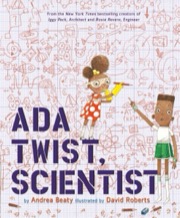
Ada Twist, Scientist
by Andrea Beaty
Same tension source (emotional stakes). Shared humor: gentle wit, situational

Danza!
by Duncan Tonatiuh
Same genre (historical). Both inspirational in tone

Jazz Day: The Making of a Famous Photograph
by Roxane Orgill
Same genre (historical). Same pacing (steady clip)

Big Bad Ironclad!
by Nathan Hale
Same genre (historical). Same pacing (steady clip)
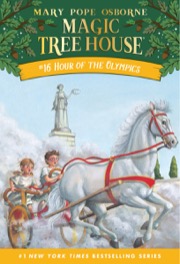
Hour of the Olympics
by Mary Pope Osborne
Same genre (historical). Same pacing (steady clip)
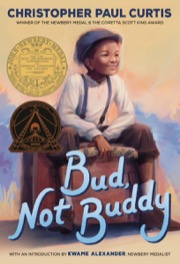
Bud, Not Buddy
by Christopher Paul Curtis
Same genre (historical). Same pacing (steady clip)
Want more picks like this?
Get 5 hand-picked book reviews for your child's age — one email a month.