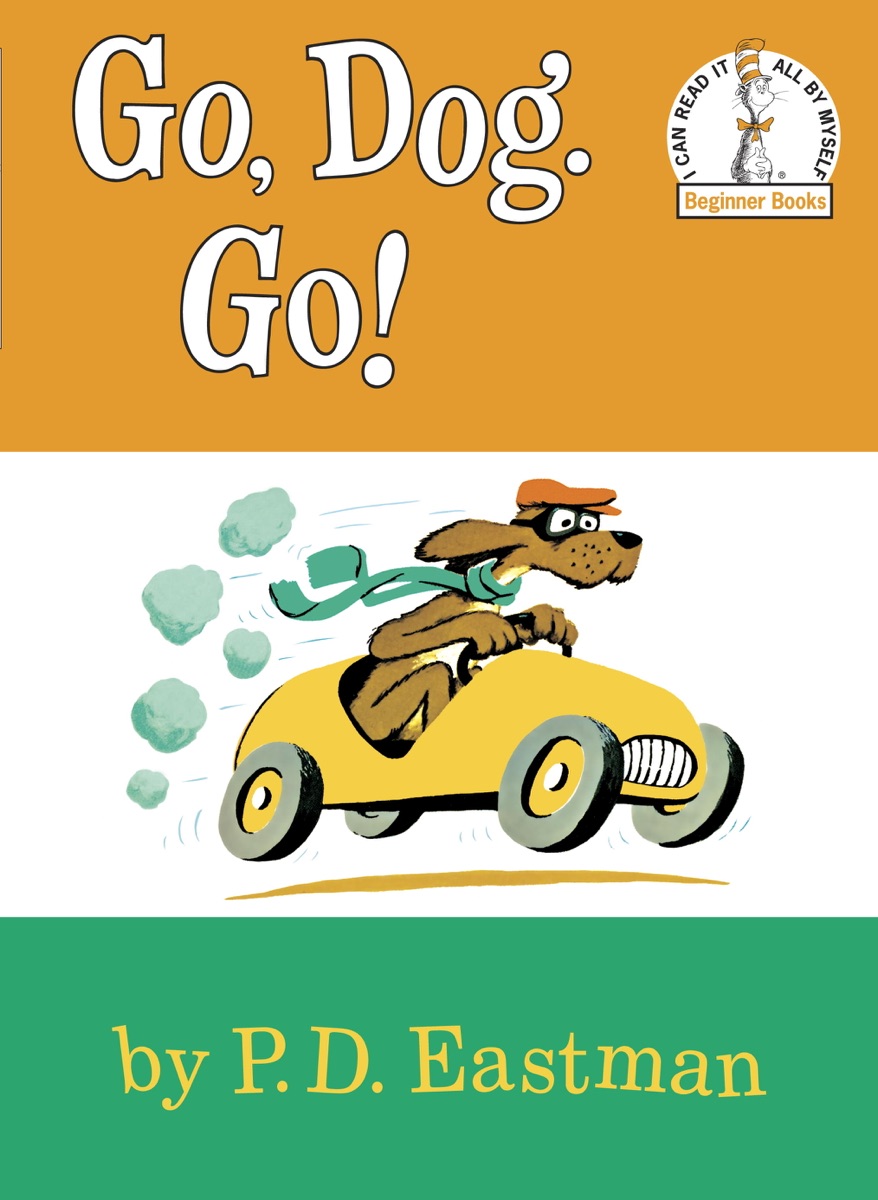
Go, Dog. Go!
by P.D. Eastman · Beginner Books
The 75-word early-reader gateway whose hat-dog refrain has launched generations of independent readers.
The story
P.D. Eastman's 1961 Beginner Book uses just 75 sight words to introduce a riot of cartoon dogs driving cars, climbing trees, and doing the opposite of one another at every page-turn. A pink poodle keeps presenting increasingly elaborate hats to a deadpan yellow judge across four spaced-out encounters, threading a tiny running joke through what is otherwise a rhythmic primer of opposites, colors, and prepositions. Edited by Dr. Seuss and engineered as a stair-step decoding curriculum, the book builds from one-word sentences to stacked prepositional phrases without a child noticing they are being taught.
Age verdict
Best fit ages 4-6, with three-year-olds enjoying the read-aloud and seven-year-olds revisiting it as a confidence text.
Our take
Beloved early-reader gateway: balanced kid/parent/teacher value built on a tightly engineered 75-word vocabulary and a satisfying running gag, with little emotional or analytical depth by design.
What stands out
Each audience's top 3 dimensions. Out of 30 scored per book.
Kids love
- Playground quotability & cool factor Strong
title line and hat-dog chant are LEGENDARY in children publishing. Multi-generational, Netflix 2021. Legendary quotability, exceptional.
- First-chapter grab Strong
Comparable to All the Broken Pieces — hook is the comprehension reward itself for emergence readers. Eastman executes it perfectly with immediate decoding dopamine.
Parents love
- Reading gateway Exceptional
Comparable to Frog and Toad Together — designed as I Can Read Level 2. 65-year multi-generational track record. Lexile 240L precision. Foundational emergence-reader gateway.
- Vocabulary builder Strong
Comparable to A Tale Dark and Grimm — EXACTLY 75 unique sight words with stair-step progression. Explicit engineered vocabulary curriculum (opposites, colors, counting, prepositions).
Teachers love
- Reluctant reader rescue Exceptional
Hard Luck — foundational reluctant-reader gateway for emergence stage. 75 sight words, big illustrations. Beginner Books flagship.
- Read-aloud power Strong
four-beat exchange built for call-and-response chants.
✓ Perfect for
- • 3-7 year olds at the sight-word stage
- • Reluctant beginning readers who need an instant comprehension win
- • ESL learners taking their first steps in English
- • Parents looking for a re-readable bedtime book that doubles as reading practice
- • Kindergarten and first-grade classrooms teaching opposites, colors, and prepositions
Not ideal for
Older readers seeking plot, character depth, or emotional substance — the book is intentionally engineered for the decoding moment, not the story moment.
At a glance
- Pages
- 64
- Chapters
- 15
- Words
- 0k
- Lexile
- 240L
- Difficulty
- Easy
- POV
- Third Person Omniscient
- Illustration
- Fully Illustrated
- Published
- 1961
- Publisher
- Random House Books for Young Readers
- Illustrator
- P.D. Eastman
Mood & style
You'll know it worked when…
If your child asks to read it themselves after a few helper passes — and finishes saying 'Go, dog. Go!' with a grin — the book has done its job.
If your kid loved "Go, Dog. Go!"
Matched across 30 dimensions — interest hooks, character appeal, tone, pacing, emotional core. Not by what other people bought. By what fits the same reader profile.
Poor Puppy and Bad Kitty
by Nick Bruel
Same genre (animal fiction). Same emotional weight (light)
Meet Biscuit!
by Alyssa Satin Capucilli
Same genre (animal fiction). Same pacing (steady clip)
I Love My New Toy!
by Mo Willems
Same genre (animal fiction). Same emotional weight (light)
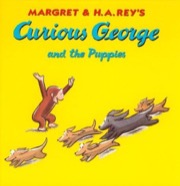
Curious George and the Puppies
by H.A. Rey & Margret Rey
Same genre (animal fiction). Same pacing (steady clip)
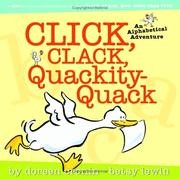
Click, Clack, Quackity-Quack: An Alphabetical Adventure
by Doreen Cronin
Same genre (animal fiction). Same pacing (steady clip)

Dear Zoo
by Rod Campbell
Same genre (animal fiction). Same emotional weight (light)
Want more picks like this?
Get 5 hand-picked book reviews for your child's age — one email a month.