
Fortunately, the Milk
by Neil Gaiman
Neil Gaiman's wildly inventive tall-tale comedy — a father's outrageous excuse for the late milk involves aliens, pirates, dinosaurs in hot-air balloons, vampires, and a time-travel paradox, all packed into 128 illustrated pages.
The story
When the milk runs out, a dad pops out to the corner shop — and takes much longer than expected. When he finally returns, his explanation involves an alien abduction, capture by pirates, an erupting volcano, vampires (who pronounce themselves 'wumpires'), a pony-led world-domination plot, and a stegosaurus named Professor Steg piloting a time-travelling hot-air balloon. His skeptical children listen as the milk passes from danger to danger and back again. Skottie Young's frenetic black-and-white illustrations on nearly every page double the absurdity. Funny, fast, and short — a perfect read-aloud or independent reader for ages 7-10.
Age verdict
Best fit ages 7-10 for independent reading; works as read-aloud for ages 5-6 with a parent voicing the dad. Older readers (10-12) still enjoy but may find it brief.
Our take
kid_first_humor
What stands out
Each audience's top 3 dimensions. Out of 30 scored per book.
Kids love
- Middle momentum Strong
Each chapter ends on a cliffhanger or escalation: father abducted by aliens, captured by pirates, milk lost in lava, milk stolen by mysterious hand, wumpires close in, universe threatened with collapse. Page-turn energy is relentless and momentum accelerates rather than sags. Stronger than Magic Tree House (7, steady adventure momentum) for compressed propulsion; closer to Wings of Fire (9) in chapter-end pull, contained inside a single short read.
- Laugh-out-loud Strong
Humor fires constantly across multiple channels — absurdist situations (aliens want to redecorate Earth with plastic flamingos, ponies plotting world domination via milk-of-power, vampires called wumpires who eat cereal), verbal play ('wumpires'), and Skottie Young's manic black-and-white illustrations doubling every gag. Stronger than Junie B Jones (7, voice-driven running gags), closer to Babymouse (8, four humor channels per page); below Dog Man (10, five-channel comedy engine) only because text-illustrated chapter book runs lower density than full graphic novel.
Parents love
- Writing quality Strong
Neil Gaiman's craft is on full display in miniature: voice control, structural elegance (frame story enclosing escalating tall tale), pacing discipline, and not a wasted sentence across 8,500 words. Comparable to Smile (8) and Wonder (8) for craft; below A Monster Calls (9) only because the slim length limits ambition. Newbery-winning author, no major award for this title but the craft is unmistakable.
- Reading gateway Strong
Short (128 pages with heavy illustrations), funny on every page, accessible Lexile (680L), and the famous-author halo opens doors. Strong gateway to longer Gaiman, to absurdist humor, and to chapter-book comedy. Comparable to Captain Underpants (8) and Babymouse (8) gateway tier; below Dog Man (9) only because text-density is higher.
Teachers love
- Read-aloud power Exceptional
The book IS a read-aloud — its frame is a parent telling a tall tale to children, declarative sentences pace beautifully aloud, voice cues (the father's deadpan, Professor Steg's earnest scientist-speak) are gift-wrapped for the reader, and Skottie Young's illustrations work in projector or under-the-camera demos. Stronger than Junie B Jones (8, voice-driven read-aloud) and Babymouse (graphic, 6); approaching the read-aloud ceiling of The One and Only Ivan (9) and How the Grinch Stole Christmas (10).
- Writing prompt potential Exceptional
Perfect tall-tale model — the obvious writing prompt ('What outrageous excuse can YOU invent for being late?') is so natural it nearly writes itself, and the book's structural template (mundane errand → escalating absurdity → return with proof) gives kids a usable scaffold. Stronger than Diary of a Wimpy Kid (6) for prompt utility; comparable to The Phantom Tollbooth (8) for idea-spark; approaching Roald Dahl-level invitations to imagine.
✓ Perfect for
- • readers ages 7-10 who love absurdist comedy and tall tales
- • fans of Roald Dahl, The Phantom Tollbooth, and Captain Underpants who want something shorter and weirder
- • reluctant readers needing a short, illustrated, immediately funny entry point
- • Neil Gaiman fans wanting to share him with younger children
- • families looking for a perfect bedtime read-aloud
Not ideal for
Readers who prefer realistic fiction, character-driven emotional depth, or longer immersive worlds; very young children who need warmer, gentler comedy without scary creatures (wumpires, pirates) even if comedic.
At a glance
- Pages
- 128
- Chapters
- 8
- Words
- 9k
- Lexile
- 680L
- Difficulty
- Easy
- POV
- First Person
- Illustration
- Heavy
- Published
- 2013
- Publisher
- HarperCollins
- Illustrator
- Skottie Young
Mood & style
You'll know it worked when…
high
If your kid loved "Fortunately, the Milk"
Matched across 30 dimensions — interest hooks, character appeal, tone, pacing, emotional core. Not by what other people bought. By what fits the same reader profile.
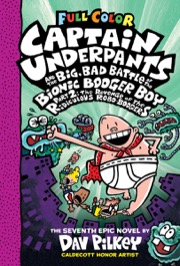
Captain Underpants and the Big, Bad Battle of the Bionic Booger Boy, Part 2: The Revenge of the Ridiculous Robo-Boogers
by Dav Pilkey
Same genre (comedy). Same pacing (rapid fire)

Dave Pigeon: How to Deal with Bad Cats and Keep (Most of) Your Feathers
by Swapna Haddow
Same genre (comedy). Same pacing (rapid fire)
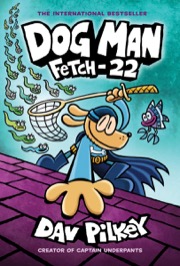
Dog Man: Fetch-22
by Dav Pilkey
Same genre (comedy). Same pacing (rapid fire)

The Day My Butt Went Psycho
by Andy Griffiths
Same genre (comedy). Same pacing (rapid fire)
One Fish Two Fish Red Fish Blue Fish
by Dr. Seuss
Same genre (comedy). Both whimsical in tone

Miss Daisy Is Crazy!
by Dan Gutman
Same genre (comedy). Same pacing (rapid fire)
Want more picks like this?
Get 5 hand-picked book reviews for your child's age — one email a month.