
Emil and the Detectives
by Erich Kästner · Emil #1
A classic that still feels alive — a provincial boy, a stolen envelope, and a gang of Berlin kids who organize to set it right.
The story
Ten-year-old Emil travels alone from his small German hometown to visit relatives in 1920s Berlin, carrying money pinned to his jacket for his grandmother. When the envelope disappears on the train, Emil slips off after the thief into a city he doesn't know — and finds an unlikely band of Berlin kids who choose to help. What follows is a warm, tactical, genuinely grown-up children's adventure about trust, cooperation, and the quiet responsibility a child carries for the people who love them.
Age verdict
Best fit 9-12; works as a read-aloud from 8; craft holds up for adult readers.
Our take
balanced_classic
What stands out
Each audience's top 3 dimensions. Out of 30 scored per book.
Kids love
- Character voice Strong
The narrator-as-companion voice is the book's signature craft — conspiratorial asides to readers, meta-commentary about writing the book itself, and warm teasing of both characters and audience. Emil's own dutiful, anxious interior voice is distinct and age-true. Stronger than most third-person narrators in middle-grade; comparable to the strongest warm-narrator voices in the benchmark.
- Ending satisfaction Strong
The ending delivers on every thread — the thief caught, the money recovered, public recognition of the kids' competence, reunion with mother, and a fairy-tale reward grace note (train fare reward) that lifts the whole book. The final chapter's reflective warmth and the Professor's parting line give the close the feeling of a well-earned exhale rather than a simple plot-close.
Parents love
- Writing quality Exceptional
Literary-grade craft: the dual-address narrator, clean paragraph rhythm, restrained emotional writing (Emil's tears rendered with minimum sentiment), and precise concrete imagery place the book alongside the benchmark's top literary tier. Nearly a century old and still reads with elegance — a mark of genuine first-rank writing rather than period preservation.
- Moral reasoning Strong
The book's moral architecture is unusually rich for middle grade — Emil's guilt-logic about his earlier misdeed (defacing a statue) drives his refusal to involve police, raising genuine questions about authority, self-reliance, and when rules should be broken. The collective ethic of the Berlin gang — pooled resources, trust among strangers — is presented as something worth examining rather than assumed.
Teachers love
- Read-aloud power Strong
The direct-address narrator is built for read-aloud — asides to the audience land as shared jokes, and the rhythmic paragraph construction suits a reader's cadence. Chapter breaks are clean and often end on curiosity rather than cliffhanger, matching a once-a-day classroom read. Read-aloud strength is one of the book's top craft dimensions.
- Mentor text quality Strong
Excellent mentor text for several specific techniques: second-person narrator address, how to build a cast quickly, how to deliver emotional interiority with restraint rather than performance, and how to weave world-building into action. Matches the benchmark's strong mentor-text tier — writing teachers can mine any chapter for a focused mini-lesson.
✓ Perfect for
- • Readers who liked The Railway Children, Ballet Shoes, or mid-century classics
- • Kids drawn to ensemble-kid-detective stories and tactical cooperation
- • Families open to older narrative voices and period settings
- • Classroom read-alouds for grades 4-6
Not ideal for
Readers who need first-page hooks, fast-moving plot, or contemporary voice. The measured opening and older translation style reward patience rather than rewarding impatience.
At a glance
- Pages
- 224
- Chapters
- 15
- Words
- 45k
- Difficulty
- Moderate
- POV
- Third Person Omniscient
- Illustration
- Sparse
- Published
- 1929
- Illustrator
- Walter Trier
Mood & style
You'll know it worked when…
Readers who settle into the narrator's voice in the first two chapters almost always finish. Those who don't, drift by Chapter 3.
If your kid loved "Emil and the Detectives"
Matched across 30 dimensions — interest hooks, character appeal, tone, pacing, emotional core. Not by what other people bought. By what fits the same reader profile.
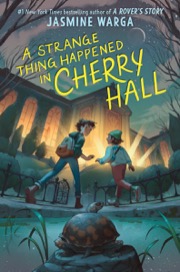
A Strange Thing Happened in Cherry Hall
by Jasmine Warga
Same genre (mystery). Both warm in tone
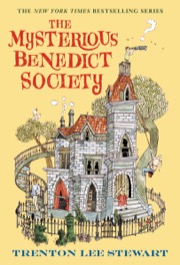
The Mysterious Benedict Society
by Trenton Lee Stewart
Same genre (mystery). Same emotional weight (moderate)
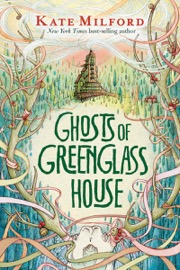
Ghosts of Greenglass House
by Kate Milford
Same genre (mystery). Both warm in tone
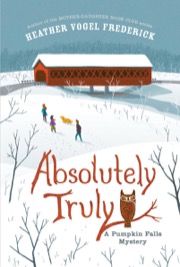
Absolutely Truly
by Heather Vogel Frederick
Same genre (mystery). Both warm in tone

Moon Over Manifest
by Clare Vanderpool
mystery as secondary genre. Same pacing (measured)

Chirp
by Kate Messner
Same genre (mystery). Same emotional weight (moderate)
Want more picks like this?
Get 5 hand-picked book reviews for your child's age — one email a month.