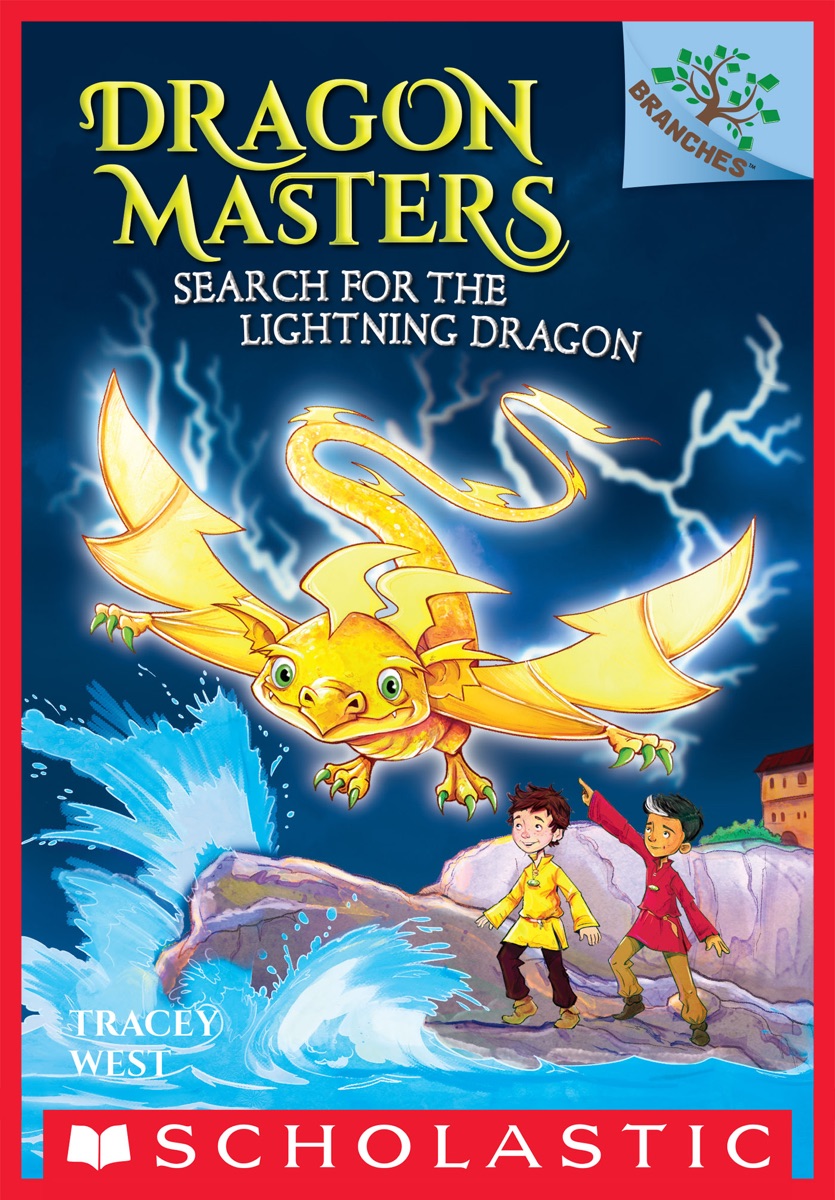
Search for the Lightning Dragon
by Tracey West · Dragon Masters #7
A new Dragon Master must choose between magical destiny and family loyalty when a wild Lightning Dragon threatens his coastal village.
The story
When a baby Lightning Dragon hatches and flies away, the Dragon Masters must track it down before its dangerous sparks hurt someone. The Dragon Stone has chosen a new master — a boy from a fishing village who does not believe in dragons. As the team races to recruit him and tame the wild dragon, a mysterious rival appears with plans of her own.
Age verdict
Best for ages six to eight; the Branches format, short chapters, and simple vocabulary are specifically calibrated for first-through-third-grade independent reading.
Our take
A kid-favored early chapter book that excels as a reading gateway while introducing genuine emotional complexity through a newcomer's family-duty dilemma — stronger in heart and humor than its series predecessor.
What stands out
Each audience's top 3 dimensions. Out of 30 scored per book.
Kids love
- Middle momentum Strong
nearly every chapter ends with cliffhanger or pivot, averaging 500 words. No middle sag occurs because West cycles action (Ch1-2,6,10,14) with emotional tension (Ch9,13) and mystery (Ch7-8). The chapter architecture itself creates 'read one more' compulsion identical to Breakout's 22-day manhunt mechanism. Specific evidence: Ch1 ends dragon loose, Ch2 master being sought, Ch3 master found, Ch4 resistance, Ch6 danger appears, continuing through Ch15—zero chapters lack forward momentum.
- Mental movie Strong
Comparable to Ash (K8=7, precise sensory economy with memorable imagery). Black-and-white illustrations by Damien Jones appear on nearly every spread, anchoring visual experience for emerging readers. Storm scene (Ch10) is vivid—lightning striking, sparks flying, roofs catching fire, physical danger vividly rendered. Portal escape (Ch14) creates visual fantasy spectacle. Dragon designs are memorable and distinctive (Lightning, Thunder, Earth dragons). Cottage whimsy (Ch5) provides visual variety and playfulness. Sits at Ash level because illustration density is heavy and specific moments achieve memorable visualization. Specific evidence: storm spreads show danger and motion, portal escape shows magical spectacle, dragon designs appear consistent and visually distinct, cottage spreads show whimsical architecture.
Parents love
- Reading gateway Strong
Tier 3 validation: Comparable to Branches exceptional-gateway tier (P7=8, engineered transition tool). Scholastic Branches format is THE designed transition from picture books to chapter books. Short illustrated chapters (avg 6 pages, 500 words), large text, generous white space, constant action, zero slow passages, dialogue-heavy scenes, series hooks pulling readers forward—every element targets emerging independent readers. Thirty-minute read length eliminates barrier to completion. Illustrations on every spread support comprehension. This is not a coincidence; this is deliberate design. Sits at P7=8 (tied for highest) because Branches literally invented the gateway-book category and executes it exceptionally. Specific evidence: 15 chapters × ~6 pages = perfect pacing, chapter cliffhangers create 'one more' reflex, dialogue reduces prose density, illustrations support emerging-reader comprehension.
- Stereotype-breaker Solid
Comparable to genuine-integration representation tier (P3=6, representation as character foundation). Latino protagonist Carlos whose core strength is loyalty to family (non-traditional masculine hero arc focused on duty rather than individual achievement). Mixed-gender diverse Dragon Masters team (Ana, Petra, Rori, Bo) contribute equally to problem-solving with zero gender-role defaults; intellectual, emotional, and physical problem-solving valued equally across genders. Representation is integrated into character arc, not cosmetic addition. Sits at P3=6 because this is representation as character foundation, not decoration. Specific evidence: Carlos introduced via family obligation, not magical destiny alone (Ch3); grandmother storyline (Ch5,13) drives emotional core; female team members (Ch1-15) have distinct roles without stereotyping.
Teachers love
- Reluctant reader rescue Strong
Tier 3 validation: Comparable to outstanding-reluctant-reader-tool tier (T9=7, Branches format = category-defining intervention). Scholastic Branches format is DESIGNED as reluctant-reader intervention: short illustrated chapters (6 pages each), constant action maintaining engagement, accessible vocabulary (560L, AR 3.4), series continuity providing motivation, large text + white space reducing cognitive load, zero slow passages. Dragon concept provides immediate appeal. Ninety-six pages + 30-min completion makes book completable in single sitting, critical for reluctant-reader success. Teacher can confidently hand this to student claiming to hate reading and expect completion. Sits at T9=7 (tied high) because Branches format is the category-defining reluctant-reader tool. Specific evidence: Format elements (short chapters, illustrations, dialogue, action) are all reluctant-reader interventions; dragon concept has inherent appeal; completion in one sitting removes persistence barrier.
- Read-aloud power Solid
Tier 3 validation: Comparable to functional-read-aloud tier (T1=6, chapter structure supports but illustration loss is real). Short chapters (6-page avg) provide natural stopping points; cliffhanger endings ('Poof! The dragon flew away!' format) create anticipation pauses. Dialogue-heavy scenes reduce narrator burden. Onomatopoeia (lightning crashes, thunder rumbles) provides natural read-aloud rhythm. HOWEVER: illustrations carry significant narrative weight and are lost without visual sharing—storm scene (Ch10) loses impact without seeing dragon's swooping motion and fire spread; portal escape (Ch14) loses magical spectacle. Sits at T1=6 because chapter structure supports read-aloud but visual loss is real. Specific evidence: Ch1,2,6,10,14 end with action/cliffhanger (natural pauses), dialogue tags dominated by 'said' (easy reading), but illustration descriptions (Ch10 storm spreads across pages) cannot be conveyed in audio alone.
✓ Perfect for
- • Emerging independent readers ages six to eight who love dragons
- • quests
- • and team adventures. Especially effective for kids transitioning from picture books to chapter books who need short chapters
- • frequent illustrations
- • and constant action to stay engaged.
Not ideal for
Older readers seeking emotional depth, complex characters, or literary prose — this is squarely an early chapter book in vocabulary and complexity.
At a glance
- Pages
- 96
- Chapters
- 15
- Words
- 8k
- Lexile
- 560L
- Difficulty
- Easy
- POV
- Third Person Limited
- Illustration
- Heavy
- Published
- 2017
- Publisher
- Scholastic Inc.
- Illustrator
- Damien Jones
- ISBN
- 9781338042887
Mood & style
You'll know it worked when…
Extremely high completion likelihood — the book reads in a single thirty-minute sitting with constant forward momentum, a likeable new protagonist, and a cliffhanger that will make them want the next book immediately.
If your kid loved "Search for the Lightning Dragon"
Matched across 30 dimensions — interest hooks, character appeal, tone, pacing, emotional core. Not by what other people bought. By what fits the same reader profile.
The Princess in Black and the Science Fair Scare
by Shannon Hale and Dean Hale
Same genre (fantasy). Both adventurous in tone
The Princess in Black Takes a Vacation
by Shannon Hale & Dean Hale
Same genre (fantasy). Both adventurous in tone

Rock Jaw: Master of the Eastern Border
by Jeff Smith
Same genre (fantasy). Both adventurous in tone
Impossible Creatures
by Katherine Rundell
Same genre (fantasy). Both adventurous in tone
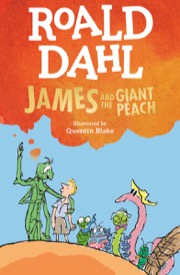
James and the Giant Peach
by Roald Dahl
Same genre (fantasy). Same tension source (physical danger)

Of Mice and Magic
by Ursula Vernon
Same genre (fantasy). Both adventurous in tone
Want more picks like this?
Get 5 hand-picked book reviews for your child's age — one email a month.