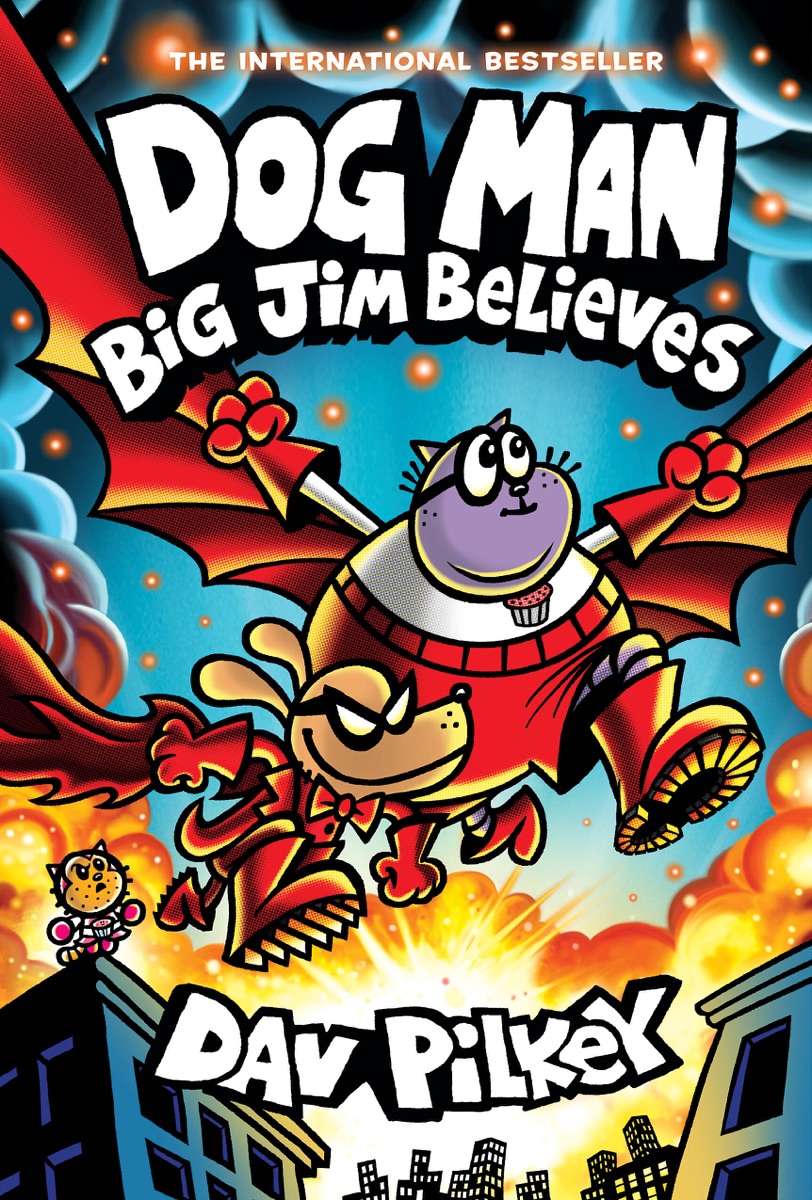
Dog Man: Big Jim Believes
by Dav Pilkey · Dog Man #14
The most tender Dog Man book yet — comedy chaos with a quiet heart about the power of belief
The story
The Space Cuties return with a new weapon that hug-proofs the city, and Commander Cupcake and Sprinkles are called back into action. As the invasion escalates, the book pauses for two quiet childhood flashbacks — one showing how a family rebuilt a hard day through imagination, the other showing where a character's pessimism came from — and uses those memories to build toward an unusually warm resolution about how belief, handed from one person to another, can rescue someone who has lost their own. The author's note makes the cognitive-bias framing explicit for parents and teachers.
Age verdict
Best for ages 7-10. Still enjoyable for older Dog Man fans up to 12 — this installment leans slightly older than some earlier books because of its emotional ambition — and the graphic format keeps it accessible for sensitive six-year-olds who love the series.
Our take
Unusually tender Dog Man installment — pure visual-comedy kid appeal with the emotional ambition of a more serious book. The belief-as-theme structure and twin childhood flashbacks give this volume more parent and teacher value than recent entries, while keeping the series' reliable reluctant-reader gateway strength.
What stands out
Each audience's top 3 dimensions. Out of 30 scored per book.
Kids love
- First-chapter grab Exceptional
Comparable to Lunch Lady and the Cyborg Substitute — both open in immediate action via character introduction. Sits at/above because the broadcast format (Sarah Hatoff) is more sophisticated hook than cafeteria-line opening; visual-first medium means reluctant reader locks in on page 1. Series knowledge amplifies hookpower for returning readers.
- Laugh-out-loud Exceptional
The Scarlet Shedder — same author, same five-humor channels (slapstick, visual gags, Flip-E-Rama, phonetic wordplay, meta commentary). Sits at (9) because this entry prioritizes the belief-theme emotional arc, so peak-humor density chapters (Ch7: Cutie Shooties, Ch12: Twelve Days parody) are balanced against quieter character moments, whereas Scarlet Shedder sustains gag density throughout.
Parents love
- Reading gateway Strong
Comparable to Frog and Toad Together — both are short-chapter illustrated books with strong emotional cores that naturally generate discussion. Sits at (8) because Dog Man's belief theme naturally prompts 'Have you felt like Grampa?' / 'What helps you see hope?' conversations, though the graphic-novel format requires less scaffolding to access than Toad's prose.
- Creative spark Strong
Off the Hook — both invite animated participation (Flip-E-Rama vs transformations) + visual discovery. Sits at (8) because Dog Man's Flip-E-Rama is specifically designed for repeated engagement (reader participates by flipping), and palette shifts reward careful re-examination, though the emotional theme (belief) doesn't generate the imaginative expansion of InvestiGators's transformation designs.
Teachers love
- Reluctant reader rescue Exceptional
Hard Luck and Dog Man: The Scarlet Shedder — all three are gold-standard reluctant-reader engagement. Sits at (9) because Big Jim Believes combines visual storytelling (graphic novel format) + high-interest humor (Flip-E-Rama, gag density) + immediate emotional stakes (belief + family care), making it exceptional reluctant-reader material; slightly below Scarlet Shedder because the emotional arc requires more reader patience than pure gag engagement.
- Empathy & self-awareness Strong
Comparable to Clementine, Friend of the Week — both teach students to see past character behavior to underlying feeling. Sits at because Dog Man's dual-perspective (Grampa's grounded pessimism vs Jim's earned optimism) is equally developed and neither is mocked, teaching students that both perspectives can be true simultaneously — a powerful emotional-literacy lesson without Breakout's three-POV structural complexity.
✓ Perfect for
- • Reluctant readers who need a gateway into books
- • Kids who love physical comedy and Flip-E-Rama interactivity
- • Dog Man series fans ready for a warmer, more emotional installment
- • Creative kids who want to draw their own comics
- • Parents looking for a graphic novel that opens real conversation about belief and imagination
Not ideal for
Readers seeking text-rich prose, advanced vocabulary, or literary complexity. Parents who dislike slapstick and potty humor, or who specifically want to avoid meta-fictional framing, may find the louder chapters tonally uneven.
At a glance
- Pages
- 240
- Chapters
- 14
- Words
- 3k
- Lexile
- GN390L
- Difficulty
- Easy
- POV
- Third Person Omniscient
- Illustration
- Fully Illustrated
- Published
- 2025
- Publisher
- Graphix / Scholastic
- Illustrator
- Dav Pilkey
Mood & style
You'll know it worked when…
A child who finishes this will likely want to go back and reread the quieter chapters, try their hand at Flip-E-Rama, or ask a parent what the word 'believe' really means. Expect creative play, drawing, and conversation to follow.
If your kid loved "Dog Man: Big Jim Believes"
Matched across 30 dimensions — interest hooks, character appeal, tone, pacing, emotional core. Not by what other people bought. By what fits the same reader profile.
Searching for Super
by Marion Jensen
Same genre (comedy). Same emotional weight (moderate)
Mary Anne Saves the Day: A Graphic Novel (The Baby-Sitters Club #3)
by Ann M. Martin (writer), Raina Telgemeier (adapter/illustrator)
comedy as secondary genre. Both warm in tone
Narwhal's Otter Friend
by Ben Clanton
Same genre (comedy). Both warm in tone
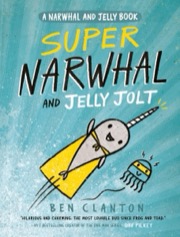
Super Narwhal and Jelly Jolt
by Ben Clanton
Same genre (comedy). Both warm in tone

The Vanderbeekers of 141st Street
by Karina Yan Glaser
comedy as secondary genre. Both warm in tone

Stick Cat: Two Cats and a Baby
by Tom Watson
Same genre (comedy). Same tension source (emotional stakes)
Want more picks like this?
Get 5 hand-picked book reviews for your child's age — one email a month.