
Caddie Woodlawn
by Carol Ryrie Brink · Caddie Woodlawn #1
A Newbery-winning frontier classic about an 11-year-old tomboy who refuses to fit the mold.
The story
In 1864 Wisconsin, 11-year-old Caddie Woodlawn runs wild with her brothers through the pioneer woods. A tomboy raised with unusual freedom, she faces questions about who she is, what kind of woman she'll become, and what loyalty means when community pressure pushes against friendship. Episodic adventures — a dangerous river crossing, a schoolyard confrontation, a midnight ride — build toward a quiet, earned coming-of-age.
Age verdict
Best for ages 9-12. Younger strong readers can manage with an adult nearby; older readers still find the identity themes resonant.
Our take
literary_classic
What stands out
Each audience's top 3 dimensions. Out of 30 scored per book.
Kids love
- First-chapter grab Strong
Opens with three red-headed children undressing on a Wisconsin riverbank to swim/wade a dangerous current in 1864, immediately establishing voice, stakes, and the tomboy premise — stronger than Sunny Rolls the Dice (5, anxious pop-quiz) but without the immediate propulsion of Artemis Fowl (10, criminal operation abroad); closest match is Lunch Lady and the Cyborg Substitute (8, grounded-then-escalating opening).
- Heart-punch Strong
Multiple genuine emotional peaks earned through accumulation — a revelation about Father's own childhood hardship mid-book, Caddie's quiet identity crisis in the late chapters, the slow farewell to a beloved animal companion; closest match is Eyes That Kiss in the Corners (7, multiple peaks earned through careful accumulation) rather than the engine-level grief of Tristan Strong (10).
Parents love
- Writing quality Strong
Newbery Medal prose with sentence-level control — the river-crossing paragraph's rhythmic clauses, the passenger-pigeon imagery, Father's story told in prose that slows and concentrates, restraint in emotional scenes where physical detail carries feeling; stronger than A Snicker of Magic (5) and comparable to Interrupting Chicken (8, sentence-level mastery).
- Real-world window Strong
A deeply specific historical window — 1864 pioneer Wisconsin with accurate material culture (birch-bark canoes, circuit-riding schoolmasters, silver dollars, cutters, passenger pigeons) plus Civil War-era politics, Native American displacement, and immigration history woven into plot; closest match is Earthquake in the Early Morning (8, strong historical-disaster window) with broader cultural scope.
Teachers love
- Read-aloud power Strong
Brink's prose was written for reading aloud — varied sentence rhythms, natural paragraph breaks, dialogue with distinct speakers, set-pieces (the river crossing, the rescue ride, Father's story) that work as performance units; closest match is Gathering Blue (8, reads aloud beautifully with natural pauses and rhythmic variation) at a more accessible MG level.
- Classroom versatility Strong
Fits American-history units (Civil War era, westward expansion, Native American relations), historical-fiction literature units, Newbery study, gender-studies entry points, and character/theme analysis — a long-standing staple of 4th-6th grade ELA; closest match is Wolf Called Wander (10) for effectiveness across many uses with slightly more limited grade span.
✓ Perfect for
- • readers who loved Little House on the Prairie or The Birchbark House
- • confident upper-elementary readers (ages 10-12)
- • classroom study of historical fiction, Newbery Medal, or Civil War era
- • parents looking for a Father-Daughter conversation starter about integrity
Not ideal for
reluctant readers, younger children (under 8) without read-aloud support, or readers seeking action-forward plotting; the episodic structure and 1935 prose require patience.
⚠ Heads up
At a glance
- Pages
- 275
- Chapters
- 24
- Words
- 50k
- Lexile
- 890L
- Difficulty
- Advanced
- POV
- Third Person Limited
- Illustration
- Sparse
- Published
- 1935
- Illustrator
- Trina Schart Hyman
Mood & style
You'll know it worked when…
Readers who enjoy character-driven historical fiction will finish; readers looking for tight plot momentum may stall in the middle.
If your kid loved "Caddie Woodlawn"
Matched across 30 dimensions — interest hooks, character appeal, tone, pacing, emotional core. Not by what other people bought. By what fits the same reader profile.

The Midwife's Apprentice
by Karen Cushman
Same genre (historical). Same pacing (measured)
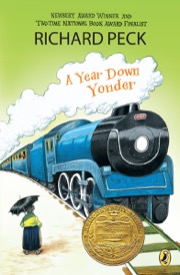
A Year Down Yonder
by Richard Peck
Same genre (historical). Both warm in tone

The Hero Two Doors Down
by Sharon Robinson
Same genre (historical). Both warm in tone

All the Broken Pieces
by Ann E. Burg
Same genre (historical). Same pacing (measured)
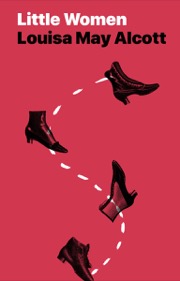
Little Women
by Louisa May Alcott
historical as secondary genre. Both warm in tone
Alma and How She Got Her Name
by Juana Martinez-Neal
Both warm in tone. Same pacing (measured)
Want more picks like this?
Get 5 hand-picked book reviews for your child's age — one email a month.