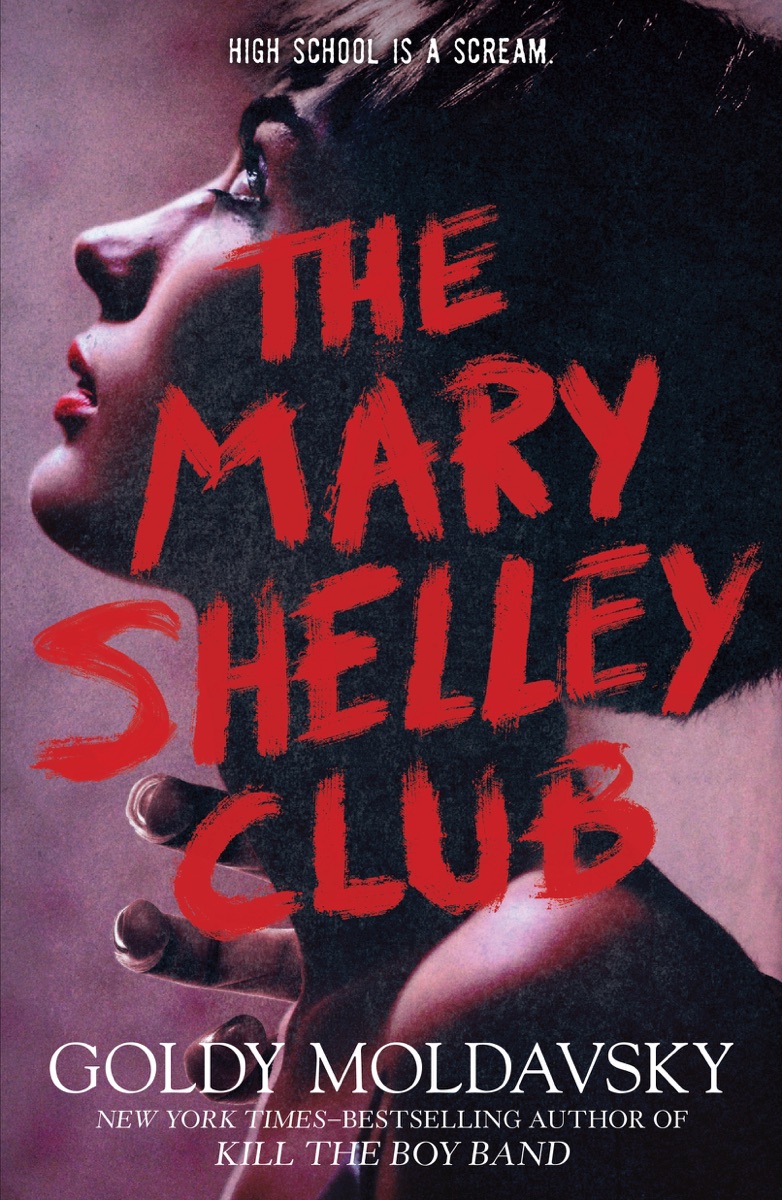
The Mary Shelley Club
by Goldy Moldavsky
A sardonic, cinematic YA horror that asks whether the fantasy of revenge is itself the trap.
The story
Sixteen-year-old horror-film obsessive Rachel Chavez transfers to an elite Manhattan prep school one year after surviving a brutal home invasion on Long Island. When a quiet, cinephile classmate recruits her into the Mary Shelley Club — a secret society of horror-loving students who design and execute elaborate 'Fear Tests' on real people — Rachel finds a catharsis she didn't know she needed. The club's escalating Tests give her friendship, romance, and something dangerously close to power. But when one Test goes wrong and a classmate pays the ultimate price, Rachel is forced to confront what kind of person she has become inside the movie she thought she was watching. Goldy Moldavsky writes a sardonic, class-savvy, cinematically paced thriller for older teens — in the lineage of Karen McManus and Holly Jackson, with a deeper moral floor than either.
Age verdict
Best for readers 14-17. Content warnings are substantial — this is a YA horror that takes the horror seriously, and the final act is genuinely intense.
Our take
Kid-favored YA thriller with strong moral-reasoning engine for parents; teacher ceiling capped by mature content
What stands out
Each audience's top 3 dimensions. Out of 30 scored per book.
Kids love
- First-chapter grab Exceptional
Opens with a masked-man cold-open prologue that ends in a killing, then whiplash-pivots to a first-person sardonic narrator at Manchester Prep one year later — a two-chapter genre-and-voice handshake that lands harder than A Court of Mist and Fury (9, immediate psychological disturbance) because the voice and the survivor arrive in the same gesture. Similar to A Court of Mist and Fury's cold-open strategy, but with a sharper voice-handshake.
- Heart-punch Exceptional
Trauma disclosed in three escalating beats, then a mid-book loss engineered with precision through a single POV switch placed immediately before the death — the reader's own bonding with that character is weaponized. Similar to A Court of Mist and Fury (9, devastating emotional architecture earned across dozens of chapters).
Parents love
- Moral reasoning Exceptional
The book's central moral argument — that the fantasy of revenge is itself the trap — is delivered through plot rather than speech. The escalating Tests walk the reader past the point where catharsis becomes complicity, and the reader's own enjoyment becomes part of the ethical question being asked. Similar to Artemis Fowl (9, moral complexity without providing easy answers).
- Stereotype-breaker Strong
A Latina protagonist cast as final girl in a slasher framework is an active genre-reframe — a deliberate correction to a tradition that historically privileged white women. Scholarship-student texture (the wrong shoes, the lunch gap, the code-switching at home) is rendered with class-specific accuracy. Similar to Gathering Blue (9, disabled protagonist whose limitation is never framed as something to overcome).
Teachers love
- Discussion fuel Strong
Peak discussion fuel — the mid-book death forces students to confront complicity, the genre-critique through plot invites film-studies cross-talk, the ending's deliberate non-closure prompts extrapolation. Similar to Gathering Blue (6, morally complex final choice) but with higher emotional ignition and more surfaces to debate.
- Reluctant reader rescue Strong
Genuine page-turner with sardonic narrator, short hard-cut chapters, horror hooks, a love triangle with both options plausible, and a concept premise that sells itself in one sentence — exactly the combination that pulls reluctant older teens through 450 pages when lighter YA won't. Similar to Hatchet (8) for reluctant-reader gateway power, though targeted at older teens rather than middle-graders.
✓ Perfect for
- • Fans of Karen McManus and Holly Jackson whodunits who want sharper teeth
- • Horror-literate teens who recognise the references (Scream, Halloween, Funny Games)
- • Readers who want a sardonic, class-savvy first-person YA protagonist
- • Reluctant older-teen readers drawn to twists and page-turn momentum
- • Teens ready to think about the ethics of revenge, complicity, and group dynamics
Not ideal for
Readers sensitive to on-page violence, home invasion, a teen character's death, psychological stalking, or sexual content; middle-grade readers and younger teens (under 14).
⚠ Heads up
At a glance
- Pages
- 468
- Chapters
- 62
- Words
- 95k
- Difficulty
- Challenging
- POV
- First Person
- Illustration
- None
- Published
- 2021
- Publisher
- Henry Holt / Macmillan
Mood & style
You'll know it worked when…
Teens who commit past chapter 3 typically finish in two or three sittings — page-turn momentum is the book's core engine, especially once the club forms in chapter 9.
If your kid loved "The Mary Shelley Club"
Matched across 30 dimensions — interest hooks, character appeal, tone, pacing, emotional core. Not by what other people bought. By what fits the same reader profile.

The Haunting of Derek Stone (The Red House and The Ghost Road)
by Tony Abbott
Same genre (horror). Same pacing (rollercoaster)
The Power of Five: Raven's Gate
by Anthony Horowitz
horror as secondary genre. Same pacing (rollercoaster)
Let's Get Invisible!
by R.L. Stine
Same genre (horror). Both suspenseful in tone

Dread Nation
by Justina Ireland
Same genre (horror). Same emotional weight (heavy)
Library of Souls
by Ransom Riggs
horror as secondary genre. Same pacing (rollercoaster)
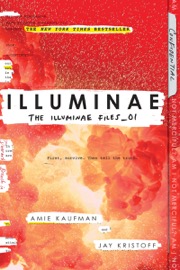
Illuminae
by Amie Kaufman & Jay Kristoff
horror as secondary genre. Same pacing (rollercoaster)
Want more picks like this?
Get 5 hand-picked book reviews for your child's age — one email a month.